
Avinash Vagh
Every ad platform rewards video. Meta, TikTok, YouTube, LinkedIn. They all push video content higher in feeds and charge less per impression for it. The problem has never been whether video ads work. It's that producing them takes too long and costs too much.
AI video ad makers change the math. You go from concept to finished ad in minutes. Produce 20 variations where you used to make one. Test hooks, visuals, and CTAs at a pace that makes traditional A/B testing look like guesswork.
This guide covers how to create AI video ads that actually convert, what to look for in an AI ad maker, and the workflows marketing teams are using to ship ad creative faster than ever.
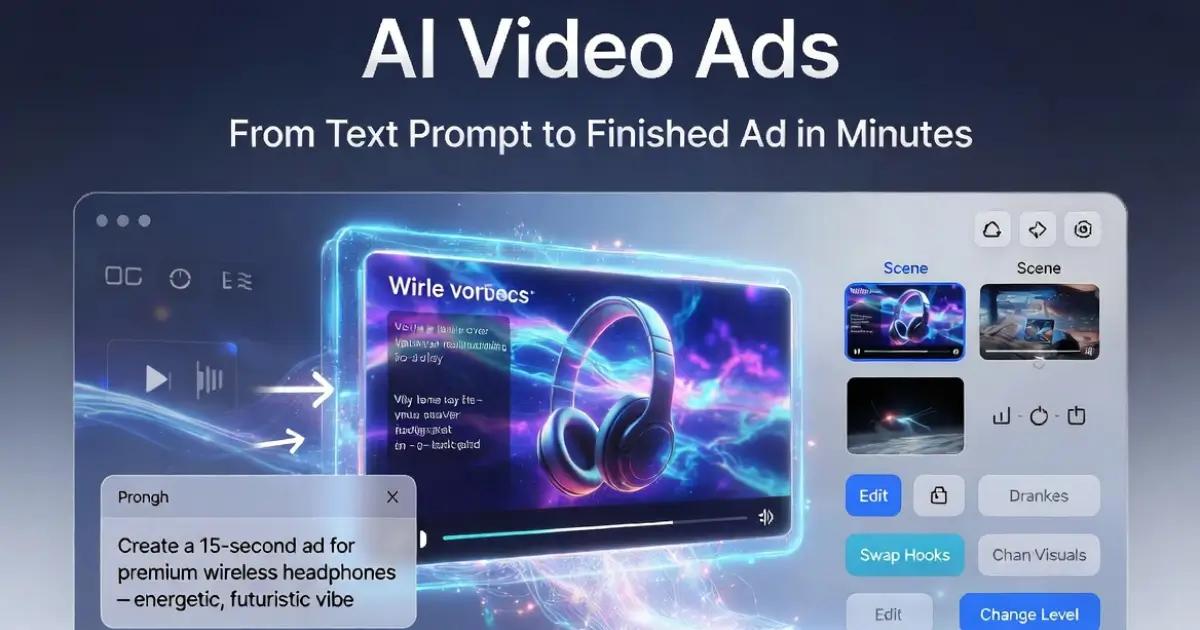
AI video ads are advertisements created using AI tools that generate visuals, voiceover, music, and editing from text inputs. Instead of storyboarding, shooting, and post-producing a video ad over weeks, you describe what you want and the AI builds it.
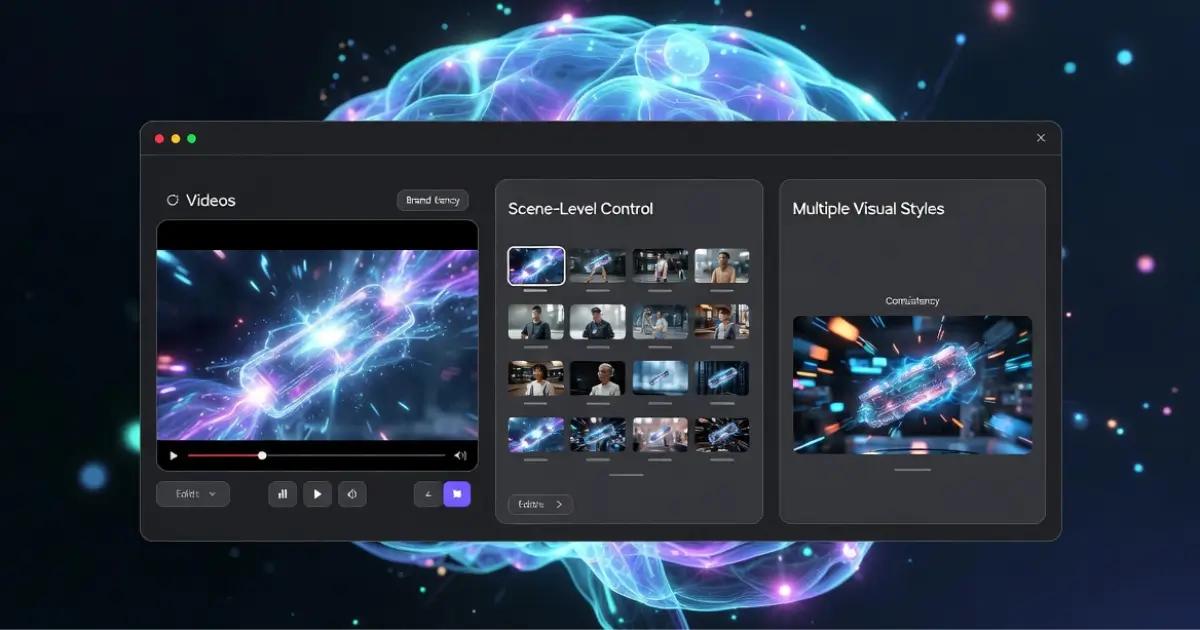
The best AI ad makers go beyond basic generation. They give you scene-level control so you can adjust individual moments, swap hooks, change visuals, and iterate without starting over. That's the difference between a toy and a production tool.
For a broader look at how AI video creation works across marketing, see our complete guide to AI video creation for marketing.
It's not that AI makes better-looking ads. It's that AI lets you make more ads, faster, and test your way to winners.
The single biggest lever in paid social is creative volume. Facebook's own research shows that campaigns with more creative variations find winning combinations faster and maintain lower CPAs over time. But traditional production caps your output at a handful of variations per campaign.
AI removes that cap. One brief becomes 10 hook variations, 5 visual styles, and 3 CTA approaches, all within an hour. You're not guessing which ad will work. You're letting the algorithm find it.
Ad fatigue hits fast. A top-performing creative on TikTok might burn out in 5 to 7 days. On Meta, 2 to 3 weeks. If your production cycle is longer than your creative lifespan, you're always behind.
AI ad creation compresses the cycle. When a creative starts fatiguing, you produce fresh variations the same day. When a trend spikes, you have an ad live while the conversation is still happening.
Traditional video ad production runs $5,000 to $50,000+ per asset. Even with a lean in-house team, each variation needs editing time. AI ad makers charge a flat monthly fee, and each additional variation costs minutes, not dollars.
This changes how you think about testing. Instead of carefully choosing which 3 concepts to produce, you test 30 and scale the ones that perform.
The first 1 to 2 seconds determine whether your ad gets watched or skipped. Start your creative process there. Write 5 to 10 different hooks for the same product or offer, then build ads around each one.
AI ad makers with script generation can help here. Frameloop's script engine is tuned for marketing, so it generates hooks designed for retention, not generic introductions. But even if you write hooks manually, the ability to produce a complete ad around each one in minutes makes batch testing practical.
A polished, cinematic look works for YouTube pre-roll. A raw, native-feeling style works for TikTok and Reels. An illustrated explainer style works for LinkedIn.
The platform dictates the aesthetic. AI ad makers with multiple visual styles (Frameloop offers 15+) let you match the look to the placement without separate production runs.
Don't think of your ad as one monolithic video. Break it into scenes: hook, problem, solution, proof, CTA. AI platforms with scene-level editing let you swap individual sections without regenerating the entire ad.
This is critical for iteration. If your hook is strong but the CTA is weak, you replace just the CTA. If the middle drags, you cut one scene. You're editing the structure, not re-producing from scratch.
Once you have a base ad that works structurally, create variations:
Frameloop supports 32+ languages with AI voiceover and auto-translated captions, so a single ad concept scales globally without re-recording or manual subtitle work.
Aspect ratios matter. A 9:16 ad for TikTok won't work in a 16:9 YouTube placement. Look for AI ad makers that export in multiple formats so you're not cropping or letterboxing.
The fewer steps between "done" and "running in your ad account," the faster your team ships.
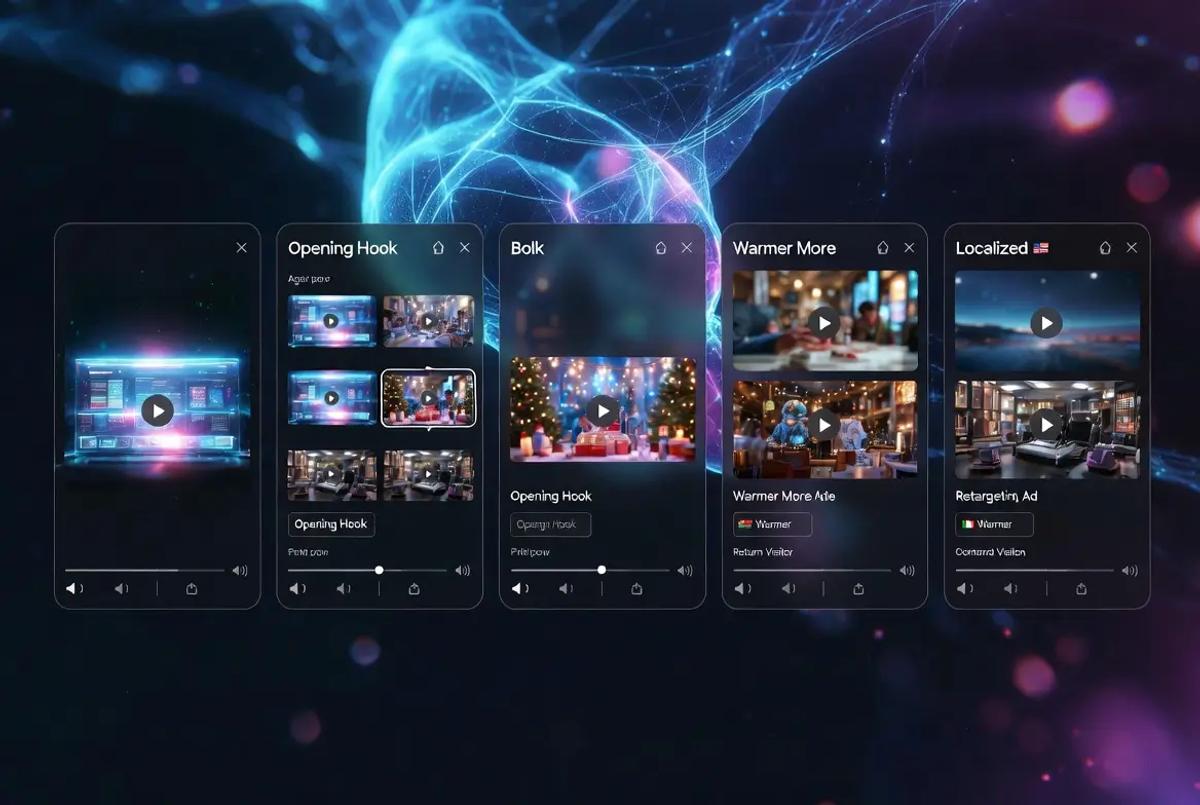
Show your product in action. AI handles the visuals while you control the messaging. Particularly effective for Sa+aS, DTC, and ecommerce where showing the product experience drives clicks.
Same ad body, 10 different opening lines. This is the simplest way to use AI ad creation and one of the most effective. You'll find hooks that 2x or 3x your view-through rate.
Holiday sales, back-to-school, Black Friday, summer campaigns. These have short windows and high stakes. AI lets you produce seasonal creative in hours instead of planning months ahead.
People who visited your site but didn't convert need different messaging than cold audiences. AI makes it practical to produce retargeting-specific creative instead of reusing your prospecting ads.
Running ads in multiple markets? AI translation and voiceover turn one ad into 10+ localized versions. The performance difference between a translated ad and a native-language ad is significant, and AI makes localization economically viable even for smaller budgets.
Not every AI video tool is built for advertising. Here's what separates a real AI ad maker from a general-purpose video generator.
Generic AI writes generic scripts. An AI ad maker needs to understand hooks, benefit-driven pacing, and conversion-focused structure. The script engine should produce copy that stops the scroll, not just fill a video with words.
If you can't edit individual scenes, you can't iterate. And if you can't iterate, you can't optimize. This is the feature that separates professional ad creation from "type a prompt and hope."
Your ads need to look like they come from the same brand. Characters, colors, product imagery, and visual style should stay consistent across scenes and across ad variations. Frameloop maintains persistent characters and product visuals throughout every video.
Different platforms, audiences, and campaign types need different looks. A platform locked to one aesthetic limits your testing range.
The output needs to go straight into your ad workflow. Look for multiple export formats, aspect ratio options, and ideally direct publishing to the platforms where you run ads.
This isn't an either/or decision. The most effective setup for many teams is AI for volume and speed, agency for tentpole campaigns.
| AI Ad Maker | Traditional Agency | |
|---|---|---|
| Time to first ad | Minutes | Weeks |
| Cost per variation | Near zero | $2,000-$10,000+ |
| Variations per campaign | 20-50+ | 3-5 |
| Iteration speed | Same day | 1-2 week rounds |
| Best for | Performance marketing, social ads, testing | Brand campaigns, TV spots, high-production storytelling |
For performance marketing, where testing velocity directly impacts ROAS, AI ad creation isn't just more efficient. It's a competitive advantage. Teams running 30 creative variations will outperform teams running 3, assuming the targeting and offer are equal.
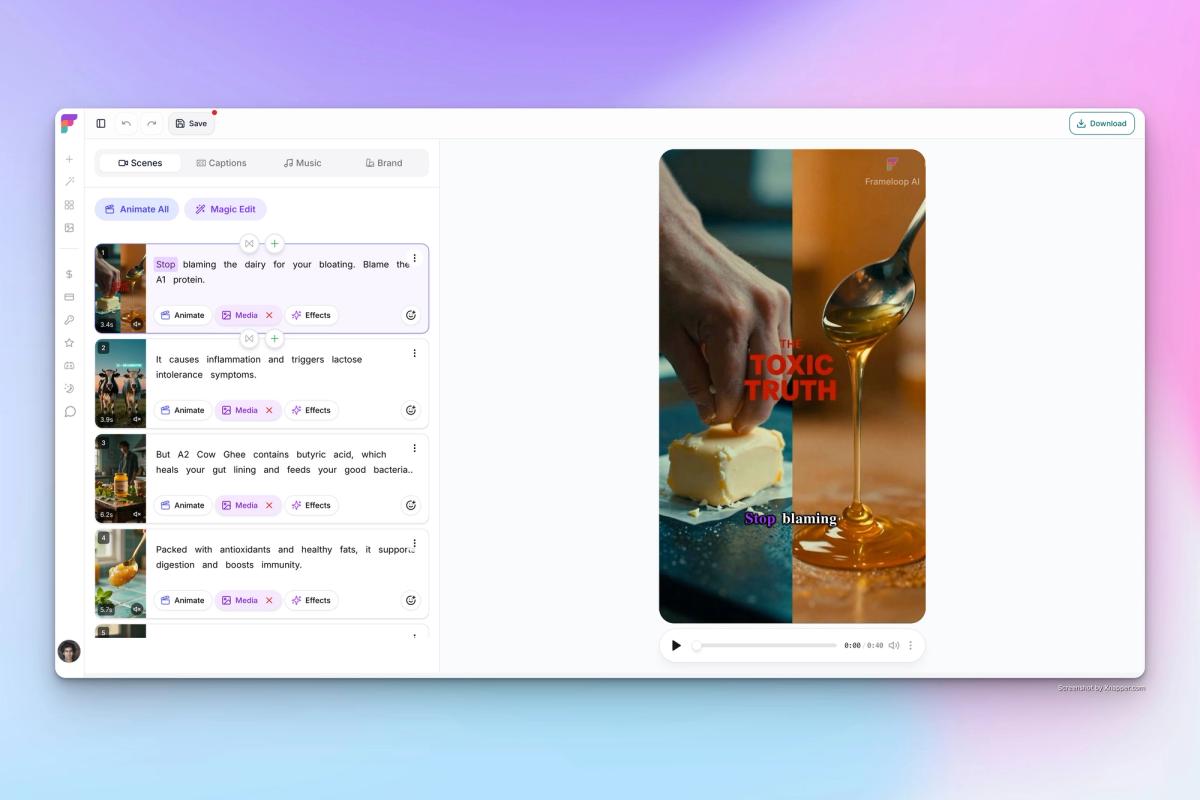
The fastest way to test AI video ads is to take a real campaign brief and run it through the tool. Don't start with a test project. Use an actual product, an actual offer, and an actual audience.
Frameloop lets you start free. Write a hook (or let the AI generate one), pick a visual style, and have a finished ad in minutes. Produce a batch of variations and put them in front of real audiences. The data will tell you what works.
If you're spending money on video ads, the question isn't whether to use AI in your creative workflow. It's how many winning variations you're leaving on the table by not using it yet.
Got great video ideas but need help bringing them to life? Frameloop AI makes it easy to create professional faceless videos with AI-generated visuals, voiceovers, and editing.
Try Frameloop AI For Free