

Karunakar Gautam
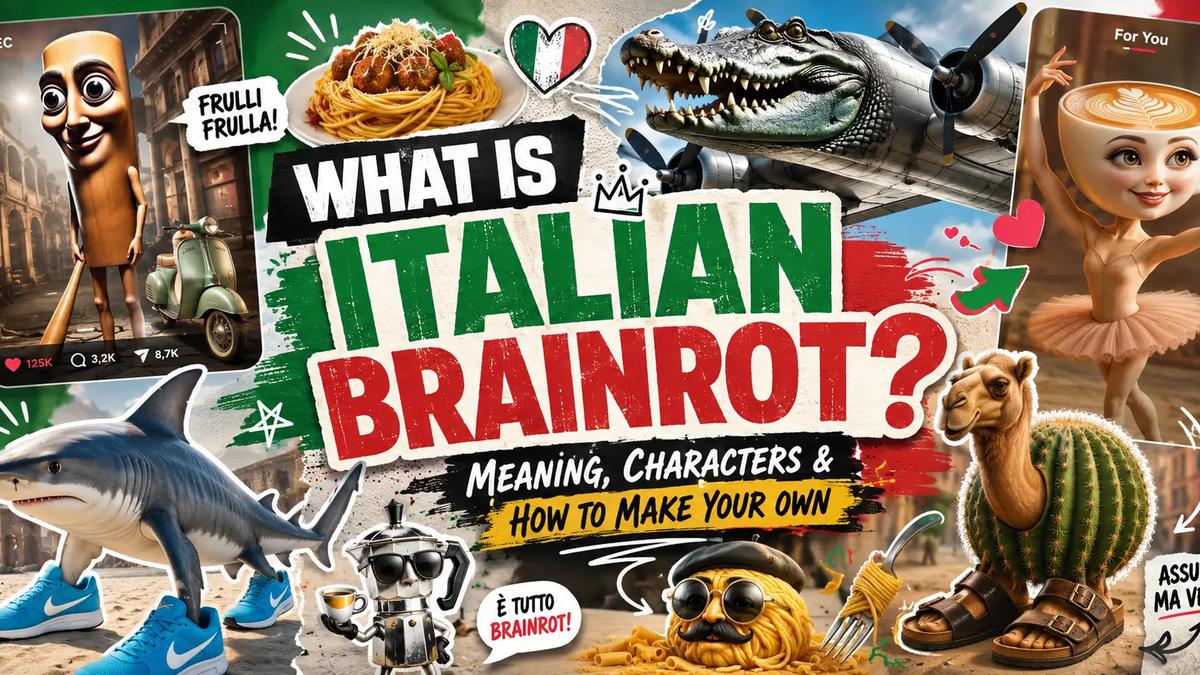
Italian brainrot should not make sense.
That is the point.
If you searched “what is Italian brainrot,” you probably saw a shark wearing sneakers, a crocodile mixed with a bomber plane, a cappuccino ballerina, or a wooden creature saying something that sounds Italian but feels like a fever dream.

Italian brainrot is a viral AI-generated meme trend built around surreal characters, nonsense names, text-to-speech voices, dramatic music, and short-form video chaos. It exploded across TikTok, Instagram Reels, and YouTube Shorts because it feels stupid, uncanny, funny, and strangely memorable at the same time.
And now creators are asking the next question: how do you make your own Italian brainrot video with AI?
Italian brainrot is a short-form meme trend where AI-generated characters are given absurd pseudo-Italian names, dramatic narration, and surreal backstories. The format usually combines animals, objects, food, weapons, shoes, or household items into one ridiculous character.
Think of it as AI meme storytelling with no normal logic.
A typical Italian brainrot video has four parts:
The format works because the viewer understands the joke immediately. The character is bizarre. The name is ridiculous. The voice sounds serious. The video treats nonsense like epic cinema.
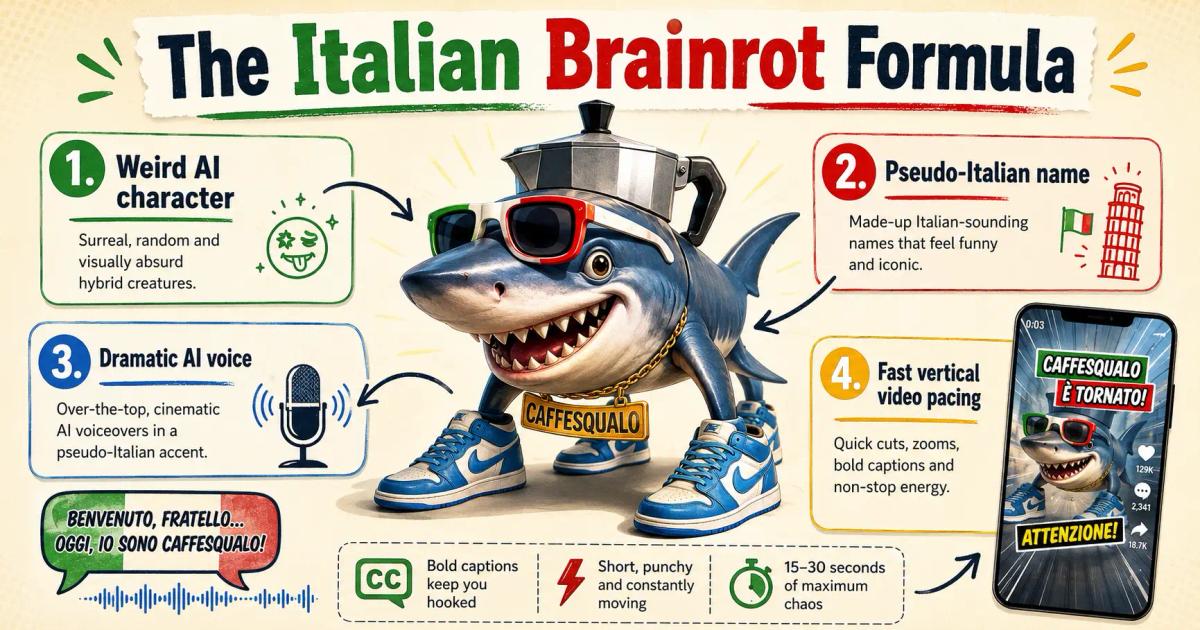
That contrast is the humor.
Italian brainrot is also part of the bigger “brainrot AI” culture, where creators make intentionally overwhelming videos for TikTok, Reels, and Shorts. The difference is that Italian brainrot has a very specific style: fake Italian rhythm, surreal AI animals, and chaotic character lore.
Italian brainrot meaning is simple: it describes a viral meme style where absurd AI-generated characters are presented with Italian-sounding names and nonsensical narration. The phrase does not mean the content is actually Italian in a strict linguistic or cultural sense.
“Brain rot” became internet slang for low-effort, highly addictive, silly online content. Oxford named “brain rot” its 2024 Word of the Year, defining it around overconsumption of trivial or unchallenging online material. That wider meaning explains why the name stuck.
Italian brainrot takes that concept and makes it more specific.
It is “brainrot” because it is absurd, repetitive, and designed for compulsive scrolling. It is “Italian” because many of the names and voices imitate Italian sounds, rhythm, suffixes, and dramatic delivery.
A clean definition:
Italian brainrot is an AI-generated meme format where surreal characters with pseudo-Italian names are introduced through dramatic, nonsensical short-form videos.
That definition is useful because it separates the trend from generic AI brainrot video generator content. A regular brainrot video can be any chaotic AI short. Italian brainrot has its own character language, voice style, and meme universe.
The exact creator of Italian brainrot is difficult to prove because the trend grew through reposts, remixes, deleted uploads, and user-made character variations. Many sources connect the early viral wave to Tralalero Tralala, widely treated as the first major Italian brainrot character.
The character is usually described as a shark wearing sneakers. It became the face of the trend because the image was instantly recognizable and the audio was weird enough to spread.
Searchers also ask “who made Italian brainrot” and “who created Italian brainrot” because the trend now feels like a franchise. But it did not start like a normal brand or show. It grew like most internet memes: one strange post became a template, then hundreds of people copied, mutated, and expanded it.
That is why Italian brainrot names are messy. There is no official creator database. There is no single canon. There are only viral characters, fan edits, lore videos, and remixes.
Italian brainrot started gaining serious attention in early 2025, though parts of its audio and humor style existed earlier in meme culture. The trend became globally visible once TikTok and Instagram users started sharing AI-generated characters with pseudo-Italian narration.
The timing matters because 2025 was also the moment AI video tools became normal for meme creators. Instead of needing a designer, voice actor, editor, and animator, a creator could generate a character image, write a nonsense script, add AI voiceover, create captions, and post a finished Short.
That changed meme production.
Before AI tools, a meme format depended on screenshots, clips, or manual edits. Italian brainrot depends on fast character generation. Every creator can invent a new creature, new name, new voice, and new lore.
That is why the trend grew so quickly.
Italian brainrot is popular because it is instantly recognizable, easy to remix, and impossible to explain without sounding ridiculous. The trend has the perfect short-form formula: strange visual, loud identity, fast payoff, and high replay value.
There are five reasons it spread:
First, the characters are visual hooks. A shark in sneakers or a crocodile-plane hybrid stops the scroll faster than normal content.
Second, the names are memorable. Tralalero Tralala, Bombardiro Crocodilo, and Ballerina Cappuccina sound like jokes before you understand anything else.
Third, the voice makes the absurdity funnier. A dramatic AI voice describing nonsense creates a fake-serious tone that Gen Alpha and Gen Z understand immediately.
Fourth, the format is easy to copy. Anyone can create a new character, invent a name, add voiceover, and publish.
Fifth, the trend has lore. Viewers do not just watch one video. They start asking which character is strongest, who came first, what language Italian brainrot uses, and how many Italian brainrot characters are there.
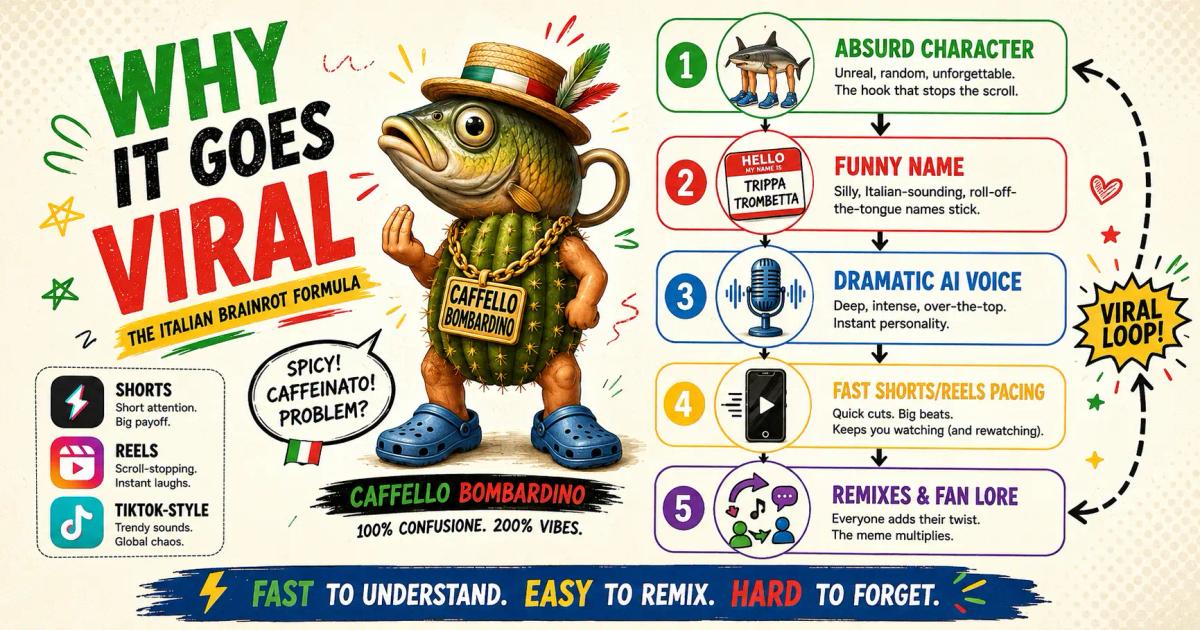
That is how a meme becomes a universe.
There is no official number of Italian brainrot characters because new ones appear constantly across TikTok, YouTube Shorts, Instagram Reels, Roblox edits, fan wikis, and meme accounts. Some sources and fan lists track dozens, while others claim more than 100 character variations.
The better answer is this: there are a few core characters everyone recognizes, then a huge long tail of fan-made names.
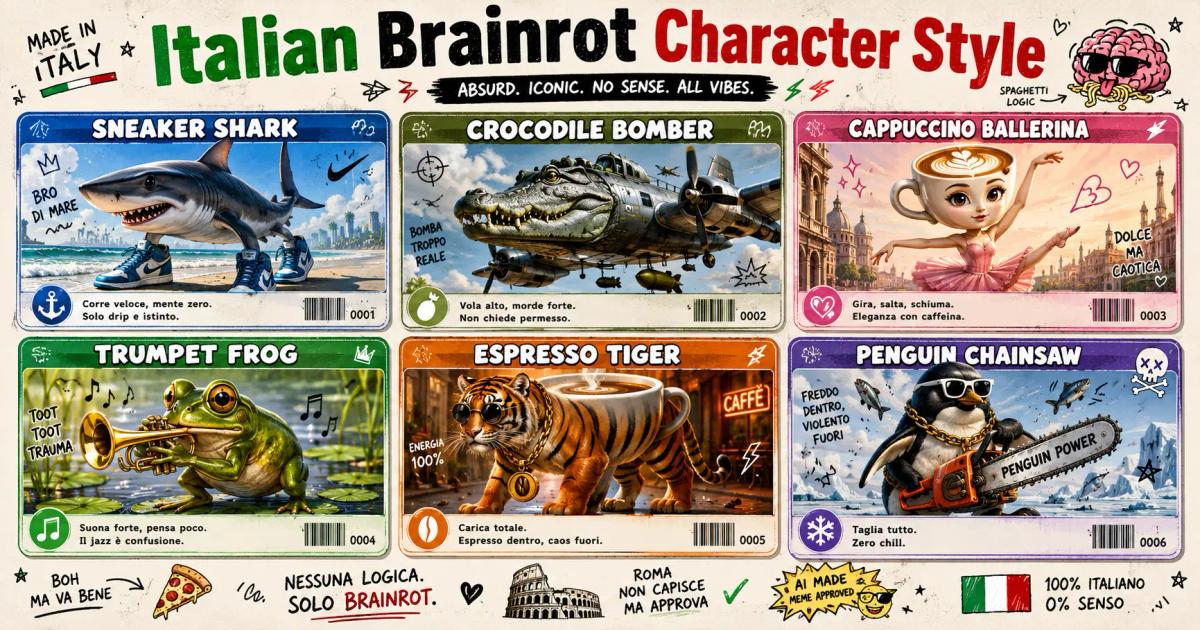
Popular Italian brainrot characters include:
Not every character is purely Italian in origin. Tung Tung Tung Sahur, for example, is often grouped into Italian brainrot edits, but its language and cultural reference come from Indonesian Ramadan tradition. That shows how fast the meme format absorbs unrelated internet characters once the audience accepts the style.
The most popular Italian brainrot names work because they sound musical, silly, and easy to repeat. The name is almost as important as the character design.
Tralalero Tralala is usually the entry point. It has the rhythm of a chant and became closely tied to the shark-with-shoes visual.
Bombardiro Crocodilo works because the name sounds like an exaggerated villain. The character is often shown as a crocodile mixed with a bomber plane, which makes the name feel like a fake action movie title.
Ballerina Cappuccina became popular because it mixes elegance and nonsense: a ballerina body, a cappuccino cup concept, and a voice that feels intentionally mismatched.
Brr Brr Patapim and Trippi Troppi work because the names sound like sound effects. They are not trying to be clever. They are trying to be sticky.
That is the lesson for creators: the best Italian brainrot names are simple, rhythmic, and visually obvious.
Italian brainrot usually uses fake or broken Italian, pseudo-Italian words, AI text-to-speech, and nonsense sounds that imitate Italian rhythm. Some videos include real Italian phrases, but many are mostly gibberish.
This is why “what language is Italian brainrot” is such a common question. The videos sound like Italian to non-Italian speakers, but they often do not translate cleanly.
Creators should be careful here.
Some original Italian brainrot audio has included offensive or controversial language. If you are making your own version, do not blindly copy viral audio. Write your own script, review the meaning, and avoid using religious, hateful, or insulting phrases just because they sound funny.
A safer approach is to create fictional names and clean narration while keeping the surreal style.
You can make Italian brainrot videos with AI by creating a surreal character, giving it a rhythmic name, writing a short dramatic script, adding AI voiceover, and editing it into a fast vertical video. The goal is not random chaos. The goal is controlled nonsense.
Here is the workflow:
Pick a strange character idea Combine an animal with an object, food, profession, vehicle, or emotion. Example: a sleepy tiger espresso machine.
Create the name Use a rhythmic, pseudo-Italian pattern. Example: Tigrello Espressino or Macchinella Ruggente.
Write a short script Keep it under 60 seconds. Introduce the character, describe its power, add a weird conflict, and end with a punchline.
Generate visuals Use a consistent visual style so the character does not change too much between scenes.
Add voiceover and captions A dramatic voice makes the nonsense funnier. Captions help the joke land even when viewers watch muted.
Edit scene pacing Brainrot videos need fast movement, but not unreadable chaos. Each scene should have one clear joke.
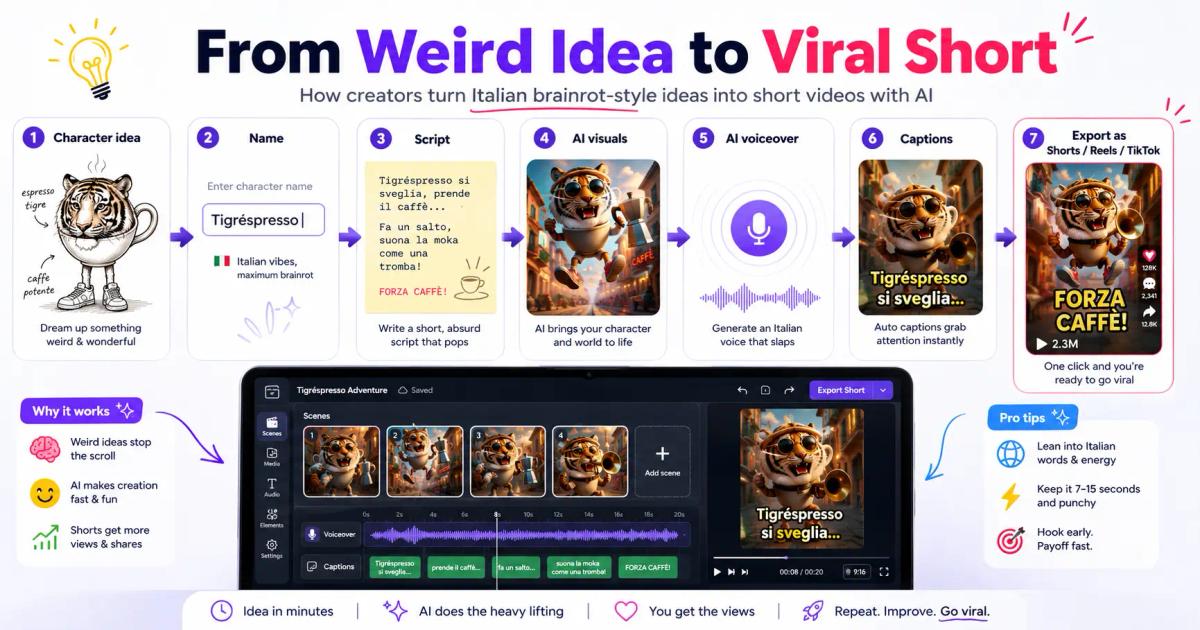
Frameloop helps with this because you can turn a script into a short video, edit scenes, adjust visuals, add captions, and polish the final output before posting. Start with script-to-video AI, then adapt the style for Shorts, Reels, or TikTok.
A good Italian brainrot generator should give you speed, but not trap you in generic AI slop. The best tools help you control the character, script, voice, captions, pacing, and visual style.
Look for these features:
A basic brainrot video generator may create quick chaos. But a better AI brainrot video generator lets you fix the parts that feel weak.
That matters because brainrot content lives or dies in the first few seconds. If the name is boring, the voice is flat, or the visual does not match the joke, people swipe.
Frameloop is useful for creators who want to make brainrot-style videos without losing control. You can use Frameloop visual styles to shape the look, create vertical videos with the AI Reel Generator, or build repeatable faceless formats with the faceless video generator.
To draw Italian brainrot, start with a simple silhouette, then add one absurd object that changes the whole identity. The easiest formula is animal plus object plus exaggerated pose.
For example:
The drawing does not need to be realistic. It needs to be readable.
A good Italian brainrot character should pass the thumbnail test. If someone sees it for one second, they should understand the joke.
For AI video, that means your prompt should clearly describe the character, style, background, and mood. Do not just write “make Italian brainrot.” Write the actual creature.
Example prompt:
“Create a surreal vertical video character: a tiger mixed with an espresso machine, dramatic Italian meme style, exaggerated eyes, cinematic lighting, absurd comedy, colorful background, short-form meme aesthetic.”
Then turn the image into a video scene and add narration.
Italian brainrot is not just random nonsense. It is a repeatable meme format: surreal AI character, memorable name, dramatic voice, fast pacing, and short-form chaos.
The creators who win with it will not just copy Tralalero Tralala or Bombardiro Crocodilo. They will create their own characters, their own names, and their own little meme universe.
Turn your Italian brainrot idea into a short video with Frameloop, then start free when you are ready to make your first one.

Got great video ideas but need help bringing them to life? Frameloop AI makes it easy to create professional faceless videos with AI-generated visuals, voiceovers, and editing.
Try Frameloop AI For Free