

Karunakar Gautam
Here is a number that should reshape every content calendar in 2026: 76% of global online shoppers say they prefer to buy products with information in their own language, and 40% will not buy from websites in other languages at all, according to CSA Research's "Can't Read, Won't Buy" study covering 8,709 consumers across 29 countries.
Yet most marketing videos still ship in English only.
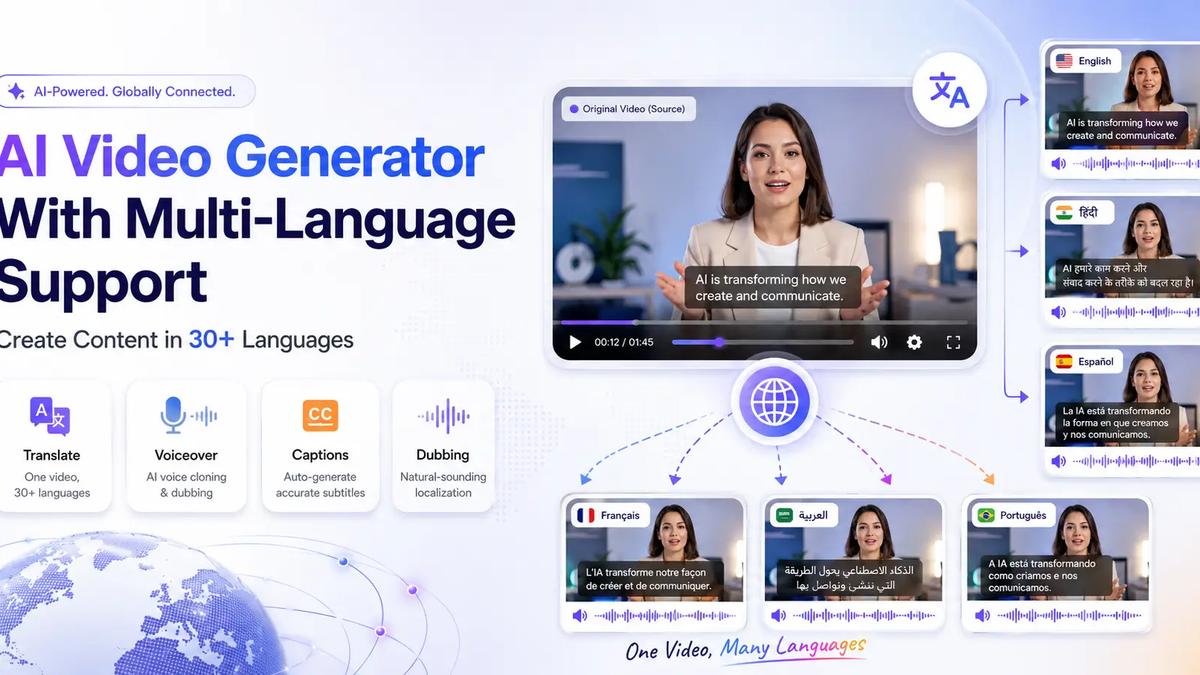
A multilingual AI video generator closes that gap in minutes, not months. Instead of hiring voice actors in Mumbai, scriptwriters in São Paulo, and editors in Paris, a single AI workflow now produces the same explainer, ad, or product demo in 30+ languages from one source script.
This guide breaks down how multilingual AI video creation actually works in 2026, what the data says about ROI, where the technology still has rough edges, and how to use a tool like Frameloop to ship video content in Hindi, Spanish, French, Arabic, Portuguese, and every other language your audience speaks.
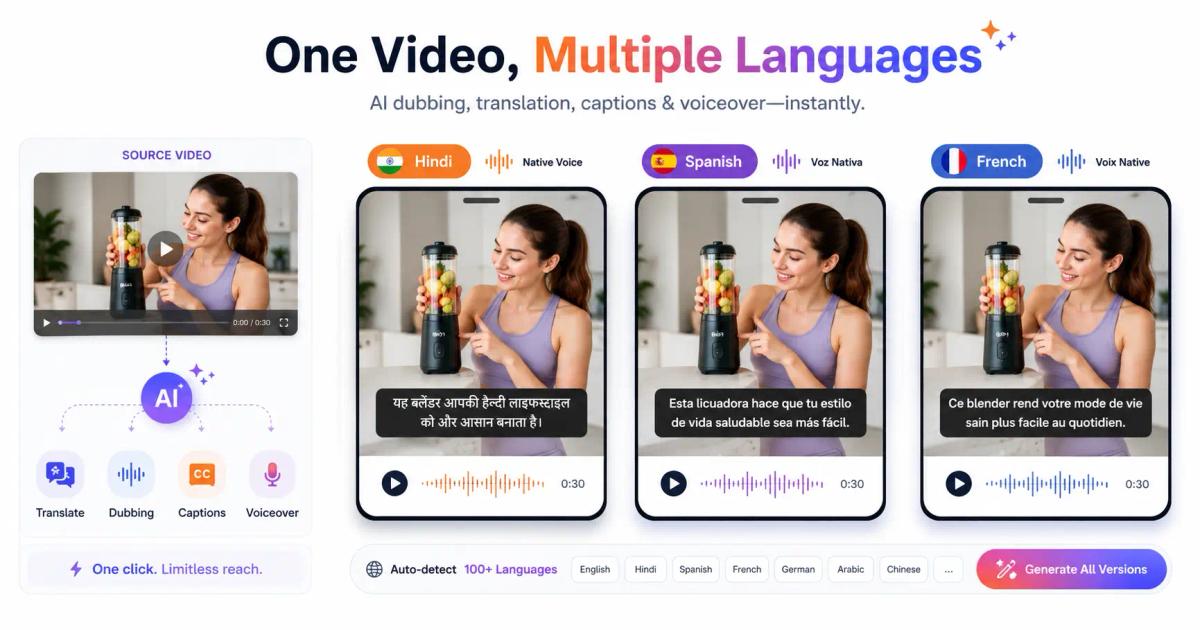
A multilingual AI video generator is software that takes a single input a script, a prompt, a blog post, or even an existing video and produces complete video content in multiple languages, with native-sounding voiceovers, accurate subtitles, and lip-synced visuals where applicable.
The core stack inside any serious multilingual video maker has four layers:
The shift from manual localization to AI-driven multilingual video creation is one of the most significant productivity jumps in marketing this decade. According to a 2024 Gartner report on generative AI in marketing, 65% of CMOs already use or plan to use generative AI for content localization within 18 months, multilingual video sits at the top of that adoption curve.
The case for an ai video generator with multiple languages is not theoretical. The data is striking.
The same CSA Research study referenced above found that 65% of consumers prefer content in their native language even when their English is fluent. That preference does not disappear in B2B either, Forrester's 2023 enterprise buyer report noted that 70% of B2B buyers across 17 countries said localized content was "important" or "very important" in their evaluation process.
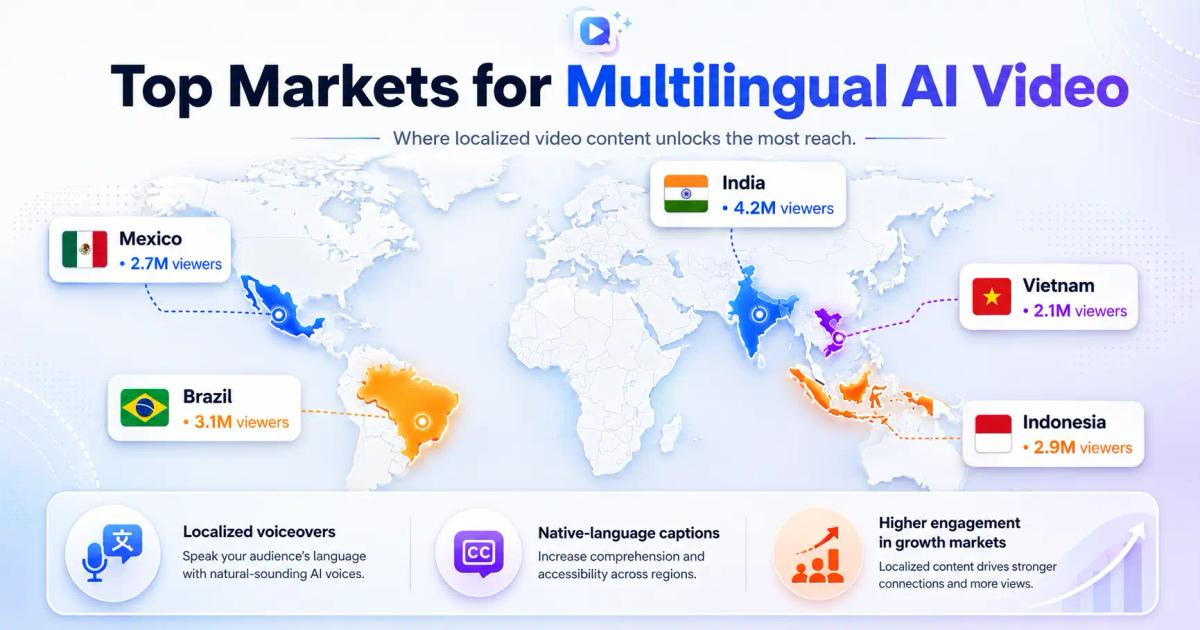
Wyzowl's 2026 State of Video Marketing report shows 91% of businesses now use video as a marketing tool, and 89% of consumers say they want to see more video from brands. But the geographic distribution of that demand has shifted. India, Indonesia, Brazil, and Mexico are now among the top five YouTube markets by daily watch time, according to DataReportal's Digital 2024 report, markets where English-only videos see a fraction of the engagement of localized versions.
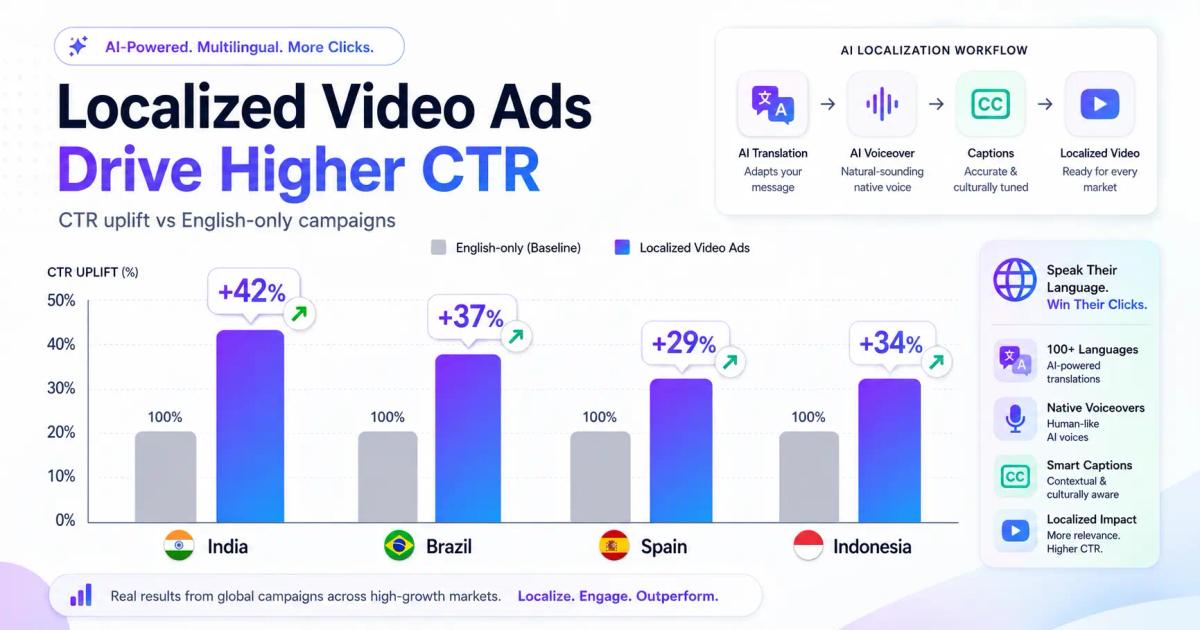
Common Sense Advisory's research on localization ROI found that companies investing in multilingual content were 1.5x more likely to report a year-over-year revenue increase than monolingual competitors. For video specifically, Idiomatic's 2023 case data shows localized video ads on Meta and YouTube produce 27% higher click-through rates and 22% lower cost-per-acquisition on average versus English-only versions targeted at non-English audiences.
"The companies winning international markets in 2026 are not the ones translating the most pages. They are the ones translating the most video. Audio and visual together carry meaning that text alone cannot." — Don DePalma, Founder and Chief Strategist, CSA Research
Before picking a tool, it helps to know what is happening under the hood. Here is the workflow most modern platforms including a multilingual video maker like Frameloop, follow.
You provide a source. That source can be:
If the input is a prompt or URL, the AI generates a structured script with scenes, voiceover lines, and visual cues. Most platforms use a large language model fine-tuned for video pacing here.
The script is translated into each target language. Modern systems use context-aware NMT meaning idioms, product names, and brand terms are handled correctly rather than translated literally. This is where bad tools fail: "Customer Success Manager" becomes nonsense in many languages without context preservation.
For each language, a native-sounding TTS voice reads the translated script. The best multilingual ai video generator platforms offer multiple voices per language, male/female, regional accents, formal/casual tone, so a Brazilian Portuguese ad does not sound like a European Portuguese one.
Visuals are either AI-generated, pulled from licensed stock libraries, or composed of AI avatars. Timing is adjusted automatically because translated scripts are rarely the same length as the original, German runs ~30% longer than English on average, while Chinese runs ~25% shorter.
Subtitles in each language are burned in or exported as separate SRT files. Right-to-left languages (Arabic, Hebrew, Urdu) get proper alignment. Final videos render in MP4, ready for YouTube, Meta, LinkedIn, or wherever they need to ship.
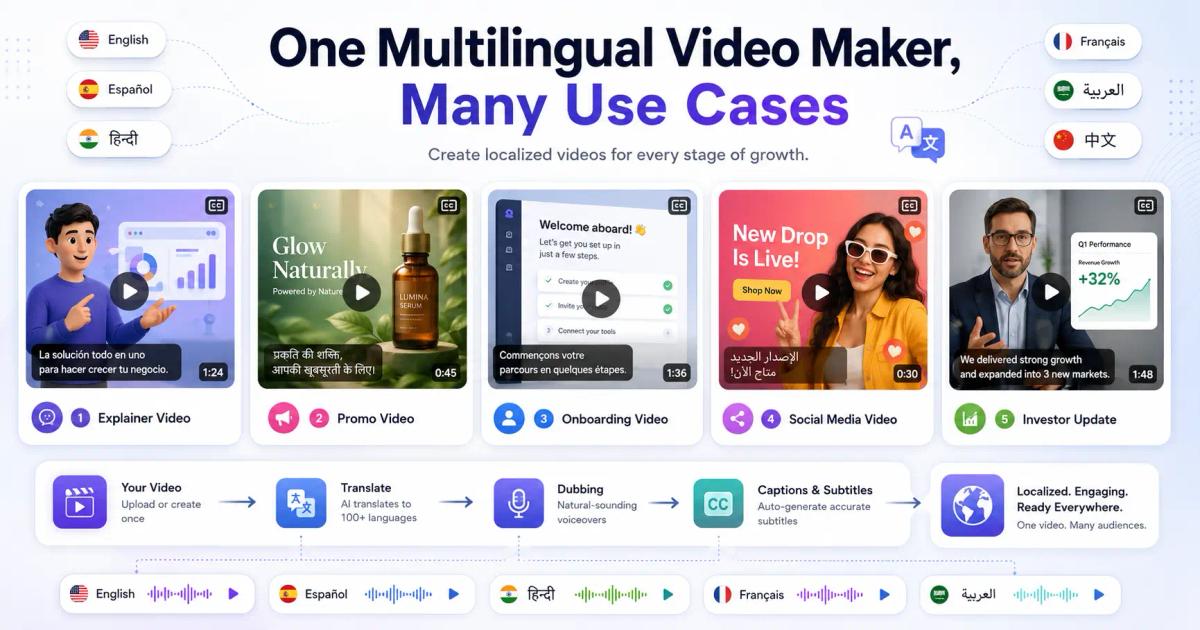
Not every video needs 30 language versions. But certain video types deliver outsized ROI when localized.
The single highest-ROI use case. According to Wyzowl, 96% of people have watched an explainer video to learn more about a product or service, and 89% say a video has convinced them to buy. Localizing a single explainer into 10 languages can multiply qualified pipeline by 5–8x in international markets.
Meta's own creative best practices documentation states that culturally adapted ad creative outperforms direct translation by an average of 22%. A multilingual ai video generator lets brands ship 10 ad variants in 10 languages from a single creative brief, something that used to take a six-week localization project.
For SaaS, ecommerce, and edtech companies, multilingual onboarding videos directly cut support tickets. Intercom's 2023 customer education benchmark report found teams that localized their top-10 tutorial videos saw a 34% drop in language-related support tickets within 90 days.
Short-form social video (Reels, Shorts, TikTok) is now native to every major market. Localized Reels see 2.4x higher completion rates than auto-translated subtitles, according to Hootsuite's 2024 Social Media Trends report.
A growing use case in global companies, quarterly updates, all-hands recordings, and investor briefings localized for regional teams and shareholders without flying in interpreters.
Not every translate video ai tool is built the same. Here is a checklist of capabilities that separate enterprise-grade multilingual video creators from glorified subtitle generators.
Language coverage Look for 30+ languages as the minimum bar. Below that, you will hit gaps in markets like Vietnamese, Tamil, Bengali, Turkish, or Swahili - all of which now have meaningful digital ad markets.
Voice quality and variety Each supported language should offer at least 3–5 voice options, including different genders and tones. Robotic TTS undermines every other strength.
Lip-sync for AI avatars If the tool uses talking-head AI avatars, lip-sync must adjust to the translated audio. Mismatched lip movement is the fastest way to make a video feel cheap.
Subtitle accuracy and styling Automatic subtitle generation should hit 95%+ word accuracy on common languages. Styling (font, position, color) should be controllable.
Right-to-left language support Arabic, Hebrew, Persian, and Urdu need proper RTL rendering. Many tools fail here.
Brand voice and glossary control Enterprise users need to lock specific terms (product names, taglines, legal language) so they never get mistranslated.
Workflow speed A serious multilingual video maker should produce a polished 60-second video in 10 languages in under 30 minutes including renders.
API and bulk export If you are localizing hundreds of videos, you need batch processing and an API. This is the difference between a creator tool and an enterprise platform.
This is where Frameloop's multilingual AI video generator stacks up. The platform handles 30+ languages, supports text-to-video AI generation from a single prompt, includes native voice synthesis per language, and offers promo video, explainer, and social media templates, all from one workflow.
Here is the workflow for shipping a promo video in Hindi, Spanish, and French from one input on Frameloop.
Step 1: Start with a prompt or script Open Frameloop and choose your video type — promo, explainer, social, or product demo. Either paste an existing script or write a prompt like: "Create a 45-second promo video for a new wireless earbuds product, highlighting noise cancellation and battery life."
Step 2: Let the AI generate the base video The AI builds a structured video with scenes, voiceover, visuals, and pacing. Review and tweak the script as needed.
Step 3: Select target languages Choose your languages — Hindi, Spanish, French, or any from the 30+ list. Each language can be selected with a regional voice preference (e.g., Latin American Spanish vs. European Spanish).
Step 4: Generate language variants The platform translates the script, generates a native voiceover per language, retimes the video to match the new audio length, and produces subtitle files.
Step 5: Review and refine Preview each version. Adjust translations manually if needed (the editor supports inline edits). Lock brand terms in the glossary so they stay consistent across all language versions.
Step 6: Export and ship Download MP4 files for each language, or export to your social scheduler directly. Subtitles export as SRT files alongside.
Total time for 3 language versions of a 45-second promo: under 15 minutes, versus the 5–10 business days a traditional localization agency would quote.
Frameloop's text-to-video AI engine and promo video generator are built around this exact workflow designed to make multilingual output the default, not an afterthought.
If your audience analytics show meaningful traffic from India, Latin America, or Southeast Asia and for most B2C and many B2B products, they do — multilingual video is no longer optional.
India: Hindi, Tamil, Telugu, Bengali, and Marathi together cover over 800 million internet users, per Statista 2024 data. India is YouTube's largest market by user base, with 491 million monthly active YouTube viewers, according to Statista's 2024 platform breakdown. English-only videos reach roughly 10–15% of that audience effectively.
LATAM: Brazil and Mexico together represent over 300 million digital consumers. Brazilian Portuguese and Mexican Spanish are not interchangeable with their European counterparts — voice, idiom, and cultural reference shift completely.
Southeast Asia: Indonesian, Vietnamese, Thai, and Filipino markets are growing digital ad spend at 18–24% year-over-year, per eMarketer's 2024 forecasts. Local-language video is the single highest-leverage channel.
A multilingual ai video generator turns these markets from "someday" to "this week."
Even with the best tool, multilingual video creation has failure modes. Here are the most common ones.
Translating literally instead of adapting culturally A direct translation of "We've got your back" into many languages reads as nonsense. Use AI tools that flag idioms for human review.
Skipping voice quality checks Some TTS voices in less-common languages still sound robotic. Always preview before publishing.
Forgetting visual context A hand gesture, a date format, or a currency symbol can break trust in localized markets. Adapt visuals where needed, not just audio.
Over-localizing brand elements Logos, product names, and core brand taglines usually stay in the source language. Lock these in your glossary.
Ignoring subtitle reading speed Translated scripts often run longer. Subtitle reading speed should be capped at ~17 characters per second for comfortable viewing.
Here is the cost comparison most teams have not actually run:
| Method | Time per language | Cost per language (60s video) | 10-language total cost |
|---|---|---|---|
| Traditional agency | 5–10 business days | $800–$2,500 | $8,000–$25,000 |
| In-house team + freelancers | 3–7 days | $400–$1,200 | $4,000–$12,000 |
| Multilingual ai video generator | 5–15 minutes | $5–$30 | $50–$300 |
Costs sourced from a 2024 Slator industry rate card and aggregated freelance platform pricing.
The takeaway is not just cost, it is cycle time. A multilingual video maker lets a marketing team test 10 ad variants in 10 markets in a single afternoon. That is a different operating model.
The world does not consume content in English. It consumes content in Hindi, Spanish, Portuguese, French, Arabic, and 30+ other languages and the brands winning in 2026 are the ones meeting audiences in their own language.
A multilingual ai video generator is no longer a nice-to-have. With a 91% video adoption rate among businesses, a 76% native-language purchase preference among consumers, and AI tools that cut localization cost by 95%+, monolingual video is now the more expensive option.
Frameloop is built for exactly this - one prompt in, 30+ language versions out, ready for YouTube, Meta, LinkedIn, or anywhere else your audience watches.
Create multilingual videos free → Sign up at frameloop.ai
Start with a single promo video in 3 languages. Ship it this afternoon. Then scale.

Got great video ideas but need help bringing them to life? Frameloop AI makes it easy to create professional faceless videos with AI-generated visuals, voiceovers, and editing.
Try Frameloop AI For Free