

Karunakar Gautam
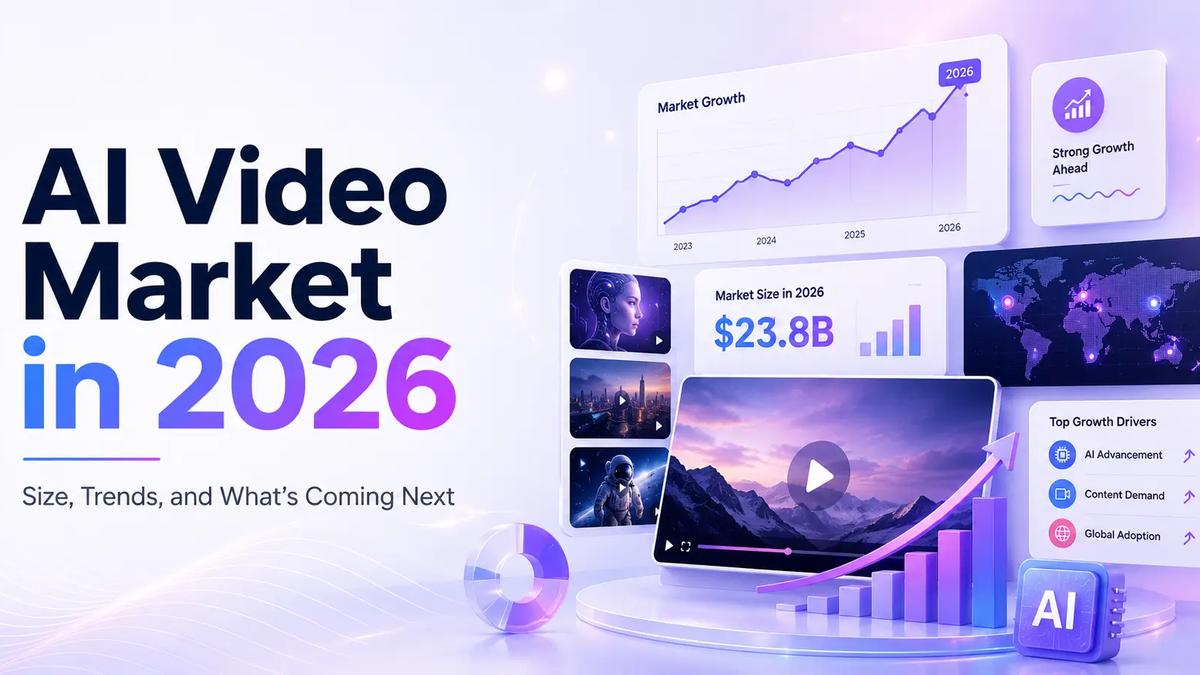
AI video has moved beyond the demo stage.
In 2026, creators are generating short films without cameras, marketing teams are producing campaign variations in hours, educators are building multilingual lessons, and businesses are testing interactive AI presenters that respond in real time.
But the biggest shift is not better-looking clips.
The AI video market is evolving from isolated generation models into complete production systems. Users no longer want a tool that produces one impressive eight-second clip. They want scripts, consistent characters, editable scenes, voiceovers, sound, brand control, vertical formats, and a reliable path from idea to published video.
That change is creating a much larger opportunity than text-to-video alone.
Market researchers estimate that the dedicated AI video-generator market will generate between $847 million and $946 million in revenue during 2026. Depending on the market definition, forecasts place the category between $3.35 billion and $3.44 billion by 2033 or 2034.
The broader AI video market, which also includes video analytics, computer vision, editing, personalization, and other AI-powered video applications, could become significantly larger.
Here is what the numbers mean, what is driving the growth, and where the AI video industry is heading next.
The AI video-generator market is approaching $1 billion in annual revenue in 2026, with most major forecasts predicting compound annual growth of approximately 19% to 20% through the early 2030s.
| Market statistic | Current estimate |
|---|---|
| AI video-generator market in 2026 | $847M to $946.4M |
| Forecast market size | $3.35B to $3.44B |
| Expected annual growth | 18.8% to 20.3% |
| Broader AI video market in 2024 | $3.86B |
| Broader AI video forecast for 2033 | $42.29B |
| Fast-growing application | Social media video |
| Major adoption areas | Marketing, education, entertainment and ecommerce |
| Leading capabilities | Text-to-video, image-to-video, audio generation and AI editing |
These figures come from different research methodologies, so they should not be combined into one headline number.
The narrow market measures software that generates videos from inputs such as text, images, audio, presentations, or documents. The broader market can also include AI video analytics, computer vision, automated editing, audience analysis, surveillance, personalization, and enterprise video intelligence.
The most defensible conclusion is that the dedicated AI video-generator category is nearing $1 billion in 2026, while the total economic opportunity around AI-powered video is already several times larger.
The global AI video-generator market is worth an estimated $847 million to $946.4 million in 2026. The difference between the estimates comes from how research firms define included products, revenue categories, geographies, and applications.
Fortune Business Insights values the market at $847 million in 2026. It expects the category to reach $3.35 billion by 2034, representing an annual growth rate of 18.8%.
Grand View Research provides a slightly higher estimate. It places the market at $946.4 million in 2026 and forecasts revenue of $3.44 billion by 2033, with annual growth of 20.3%.
Both estimates point to the same conclusion: AI video generation is still an early market, but it is moving toward mainstream software adoption.
The larger numbers sometimes associated with AI video use a broader definition. Grand View Research estimates that the overall AI video market was worth $3.86 billion in 2024 and could reach $42.29 billion by 2033.
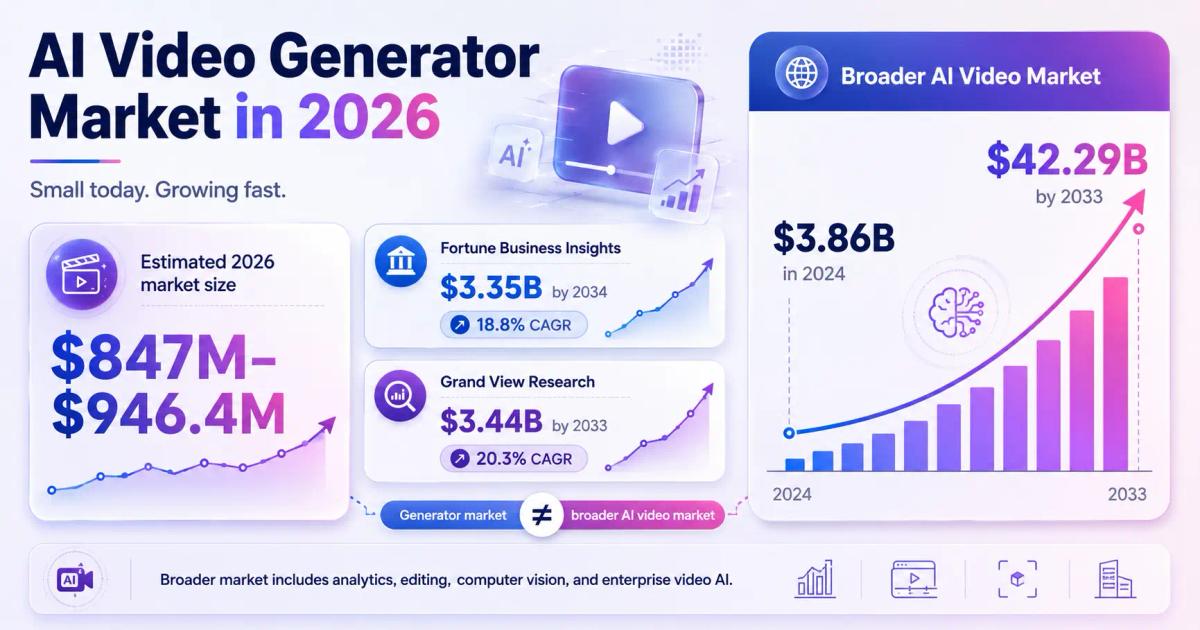
That broader forecast includes more than generative video. It also counts areas such as video analysis AI, computer vision, cloud-based video intelligence, automated editing, and enterprise applications.
This distinction matters.
A headline claiming that “the AI video generator market will reach $42 billion” may be misleading if the underlying report includes video analytics and other adjacent technologies.
Regional leadership varies by research methodology.
Fortune Business Insights estimates that North America represented 41% of the AI video-generator market in 2025. Grand View Research places Asia Pacific first with a 31% share during the same year.
These figures are not necessarily incompatible. One report may count a broader set of regional vendors, revenue sources, or deployment models than another.
North America remains important because it contains major AI research companies, cloud providers, software buyers, and creative technology platforms. Asia Pacific is growing quickly because of large creator populations, mobile-first content consumption, regional AI models, and expanding startup ecosystems.
The AI video market is growing because organizations need more video than traditional production teams can economically produce. AI reduces the time and cost required to create, adapt, localize, and test video content.
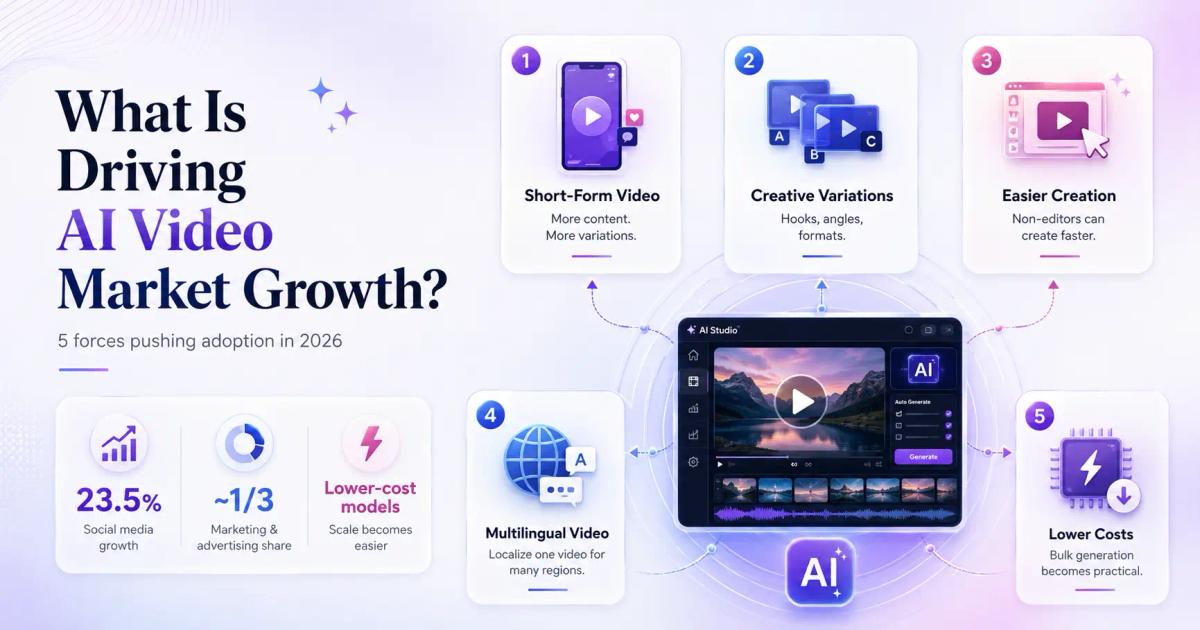
Five forces are driving the market.
TikTok, YouTube Shorts, Instagram Reels, ecommerce ads, and vertical video feeds have increased the demand for frequent video output.
Traditional production is poorly suited to this volume. A team cannot organize a new shoot every time it wants to test another hook, product angle, language, or audience segment.
AI video tools let creators and marketers produce more variations without repeating the entire production process.
Fortune Business Insights expects social media to be the fastest-growing application segment, with a projected annual growth rate of 23.5%.
Performance marketing depends on iteration.
A team may need five hooks, three audience angles, multiple formats, and several localized versions of the same campaign. Producing these variations manually can make testing too expensive.
AI video changes the economics. Marketers can create a base concept, modify scenes, replace products, change narration, and export versions for different platforms.
Marketing and advertising are expected to represent approximately one-third of the AI video-generator market in 2026.
Traditional video production requires cameras, actors, lighting, editing software, stock media, audio tools, and technical knowledge.
AI video platforms reduce this complexity.
A marketer can start with a script. A teacher can begin with a lesson. A faceless creator can begin with a story. A founder can start with a product idea.
The software handles more of the execution layer, while the user directs the message and final output.
Localization used to require separate voice actors, editors, translators, and production workflows.
AI-generated voiceovers, automated captions, lip synchronization, and multilingual editing now make it possible to adapt one video for several regions.
This expands the addressable audience for creators, educators, global companies, and ecommerce brands.
AI video remains computationally expensive, but the cost is moving downward.
In 2026, Google introduced Veo 3.1 Lite as a lower-cost model for high-volume applications. Google said the model costs less than half as much as Veo 3.1 Fast while maintaining the same generation speed.
Lower costs make AI video practical for more than occasional experiments. They support APIs, bulk generation, personalized ads, product catalogs, educational libraries, and high-volume creator workflows.
The AI video market contains three different competitive layers: foundation-model providers, workflow platforms, and specialized applications.
Treating every company as a direct competitor hides how the market actually works.
Foundation-model companies build the underlying systems that generate or transform video.
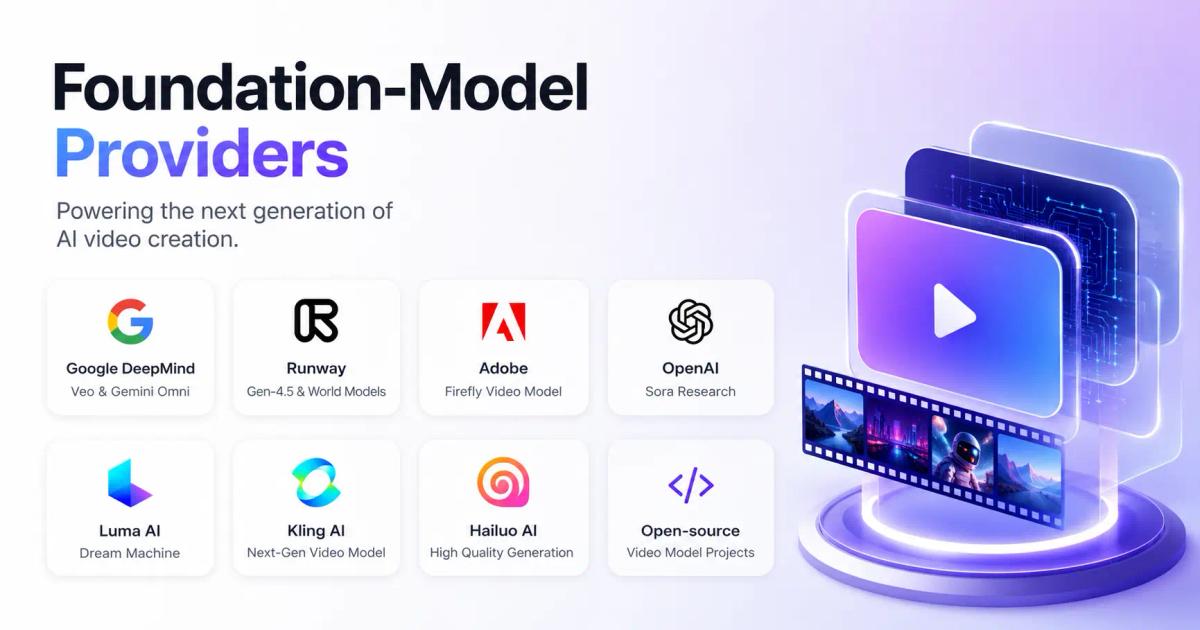
Important players include:
These companies compete on realism, motion, prompt adherence, audio generation, physical consistency, inference speed, controllability, and cost.
Their models may reach users directly, but they are also increasingly available through APIs and partner platforms.
Workflow platforms turn raw model capabilities into usable production systems.
This layer includes products that combine scripting, generation, editing, voiceovers, captions, music, branding, collaboration, and export tools.
Examples include Frameloop, InVideo, Pictory, Fliki, VEED, Synthesia, HeyGen, and other end-to-end platforms.
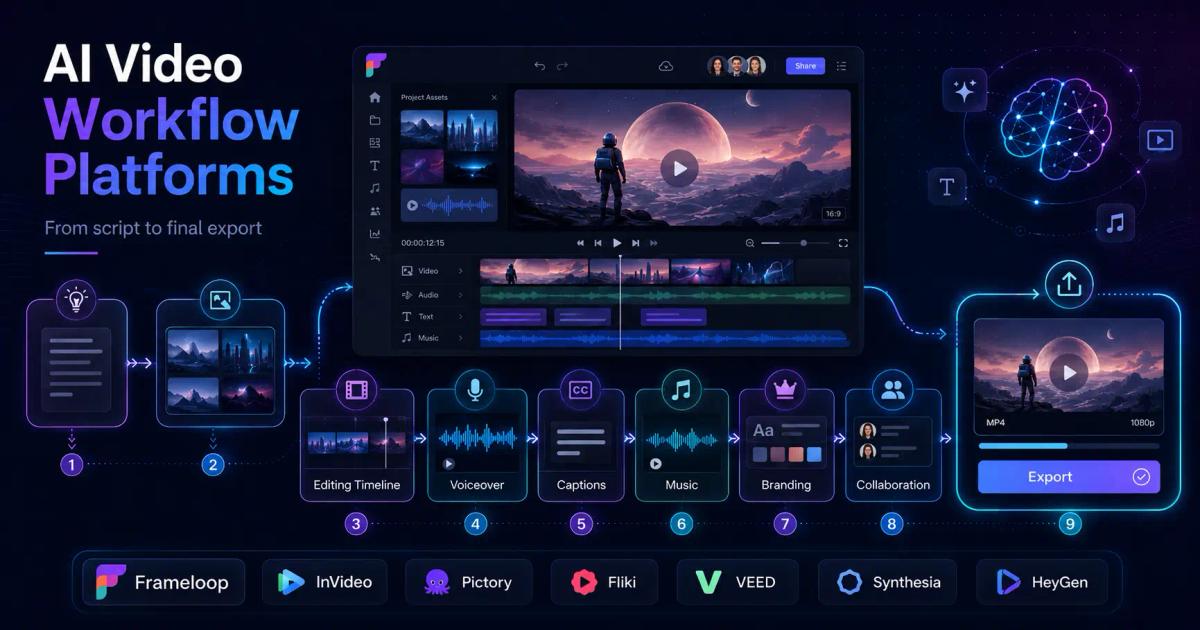
The workflow layer matters because access to a strong model does not automatically create a strong video.
Users still need to divide a script into scenes, maintain visual continuity, control pacing, correct mistakes, add branding, choose voices, format outputs, and prepare the final export.
The third layer targets narrow use cases.
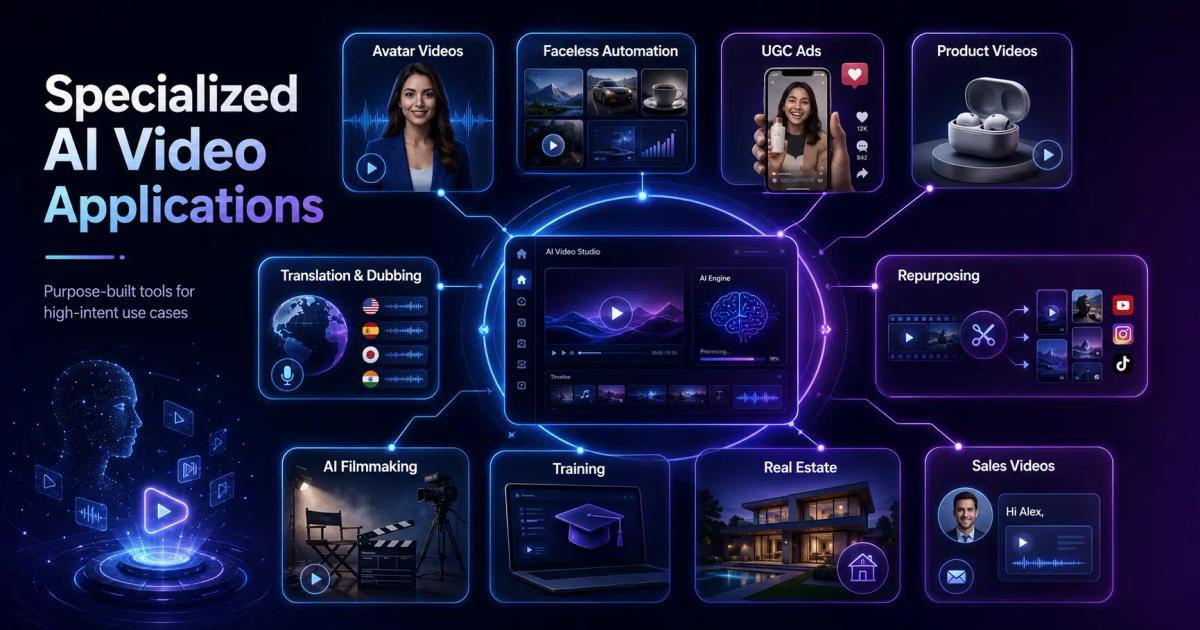
These include:
Specialized products can grow quickly because their workflows match a specific buyer more closely than a general-purpose model.
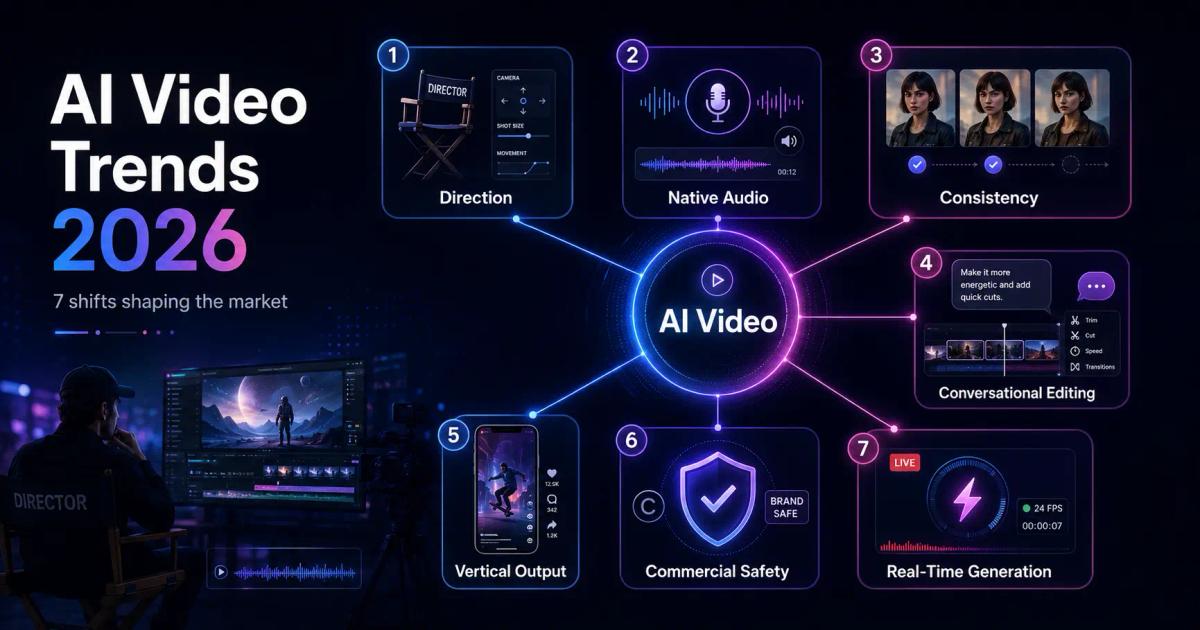
The biggest AI video industry trends in 2026 are control, native audio, consistency, multimodal editing, vertical output, commercial safety, and real-time generation.
The first generation of tools focused on creating a clip from a prompt. The next generation focuses on directing the result.
Users want to change one scene without losing the rest of the video. They want control over camera movement, pacing, visual style, products, characters, dialogue, and sound.
This shift creates demand for structured editing systems rather than one-shot generation boxes.
AI video generators create footage. AI video production platforms help users direct complete videos.
That distinction will become increasingly important as raw generation quality becomes easier for competitors to access.
Earlier video models produced silent clips. Users had to create dialogue, music, ambience, and effects separately.
Google’s Veo 3.1 introduced video generation with audio, while OpenAI described Sora 2 as a combined video and audio system with synchronized dialogue and sound effects.
Native audio reduces the number of tools required to produce a scene. It also creates new challenges around voice identity, consent, music rights, and dialogue control.
A visually impressive clip is not enough for storytelling or branded content.
Creators need the same character to remain recognizable across scenes. Ecommerce companies need products to retain their shape, logo, color, and proportions. Filmmakers need locations and visual worlds to feel connected.
Runway’s Gen-4 research emphasized consistent characters, locations, and objects. Google’s Veo updates added stronger reference-image workflows.
Consistency is moving from a premium feature to a baseline expectation.
Prompting is becoming iterative.
Google introduced Gemini Omni in May 2026 with the ability to combine text, images, audio, and video as inputs, then edit generated video through conversation.
Instead of rebuilding a prompt, a user can request:
Conversational editing will make AI video more accessible, but structured interfaces will still matter when users need precise control across many scenes.
AI video models were initially optimized for cinematic landscape clips.
That does not match how a large share of social content is consumed.
Google added native 9:16 output to Veo 3.1 for platforms such as YouTube Shorts. More platforms are now treating vertical output, mobile creation, captions, and short-form pacing as native requirements.
This matters because cropping a landscape generation into vertical format often removes important visual details or breaks the composition.
Companies care about more than visual quality.
They need to understand training-data policies, content ownership, likeness permissions, copyright risk, brand safety, and whether generated assets can be used commercially.
Adobe positions its Firefly Video Model around commercially safe and IP-friendly generation. This gives Adobe a distinct enterprise argument, even when other models may compete on raw visual performance.
The enterprise market will increasingly reward providers that combine output quality with traceability, permissions, security, and governance.
Most AI video is generated before a viewer watches it. Real-time systems create or animate content while the interaction is happening.
Runway is already exploring real-time video generation through responsive characters generated from reference images.
Potential applications include:
This could eventually become a separate market from traditional AI video creation.
The largest risks are generation cost, inconsistent output, copyright uncertainty, synthetic-media abuse, weak product differentiation, and a growing volume of low-quality content.
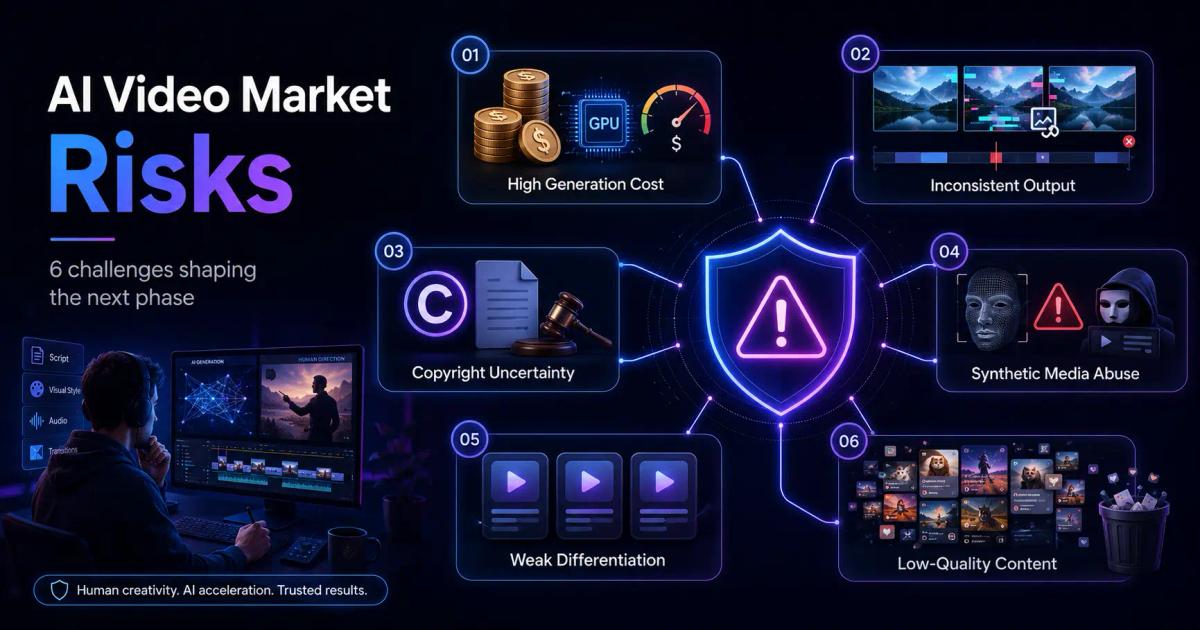
Lower production barriers make it easy to publish repetitive, low-effort videos.
More content does not automatically create more value. If feeds become saturated with generic visuals, robotic scripts, and copied formats, audiences may become more skeptical of AI-generated media.
The advantage will shift toward creators who combine AI speed with human direction.
Many software products can access similar models through APIs.
That means “we use the latest AI model” is not a durable advantage. Competitors can add the same model shortly afterward.
Sustainable differentiation is more likely to come from workflow design, editing control, proprietary context, brand systems, distribution, community, data, and customer trust.
OpenAI’s official Sora 2 page now notes that the standalone Sora product became unavailable on April 26, 2026. The change illustrates an important market lesson: a breakthrough model does not guarantee a durable standalone product.
AI video can imitate people, brands, voices, products, and artistic styles.
Platforms, governments, and technology providers are still defining rules around disclosure, consent, ownership, training data, and deceptive synthetic content.
Professional users will need stronger permission systems and clearer records of how assets were generated.
AI video is likely to become longer, more interactive, more editable, more personalized, and more deeply integrated into existing content workflows.
The next phase will not be defined by one model winning every benchmark. It will be defined by systems that make video generation dependable enough for daily production.
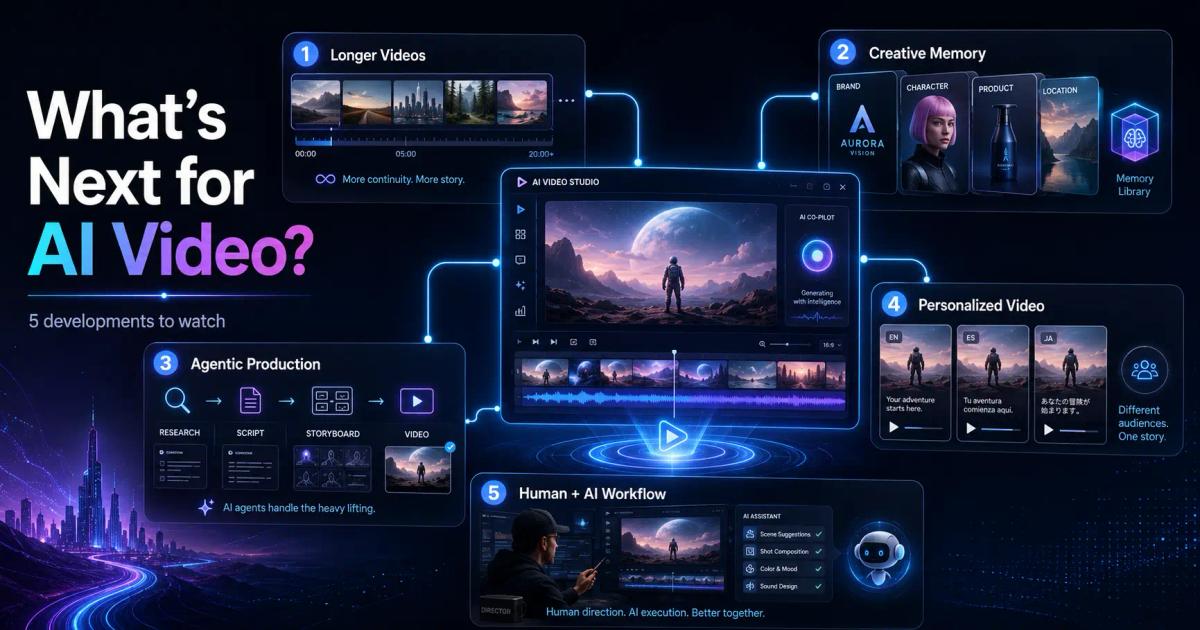
Expect five major developments:
Longer coherent videos: Models will retain characters, locations, and narrative context across longer sequences.
Persistent creative memory: Platforms will remember brand rules, characters, products, previous scenes, and visual preferences.
Agentic production: AI agents will research, script, storyboard, generate, edit, review, and prepare platform-specific exports.
Personalized video at scale: Companies will generate different videos for customer segments, products, languages, or individual viewers.
Hybrid human-AI workflows: Creators will direct the concept and final decisions while AI handles repetitive production tasks.
The winning products will not eliminate creators.
They will reduce the distance between an idea and a finished, controllable video.
Frameloop sits in the workflow-platform layer of the AI video market. It combines AI generation with a scene-based editing system designed for creators and marketers who want speed without giving up control.
Raw models are powerful, but a finished video requires more than a prompt.
A creator may need to fix one visual, change a voiceover, adjust pacing, upload a product image, replace music, rewrite a scene, or preserve a character across the full story.
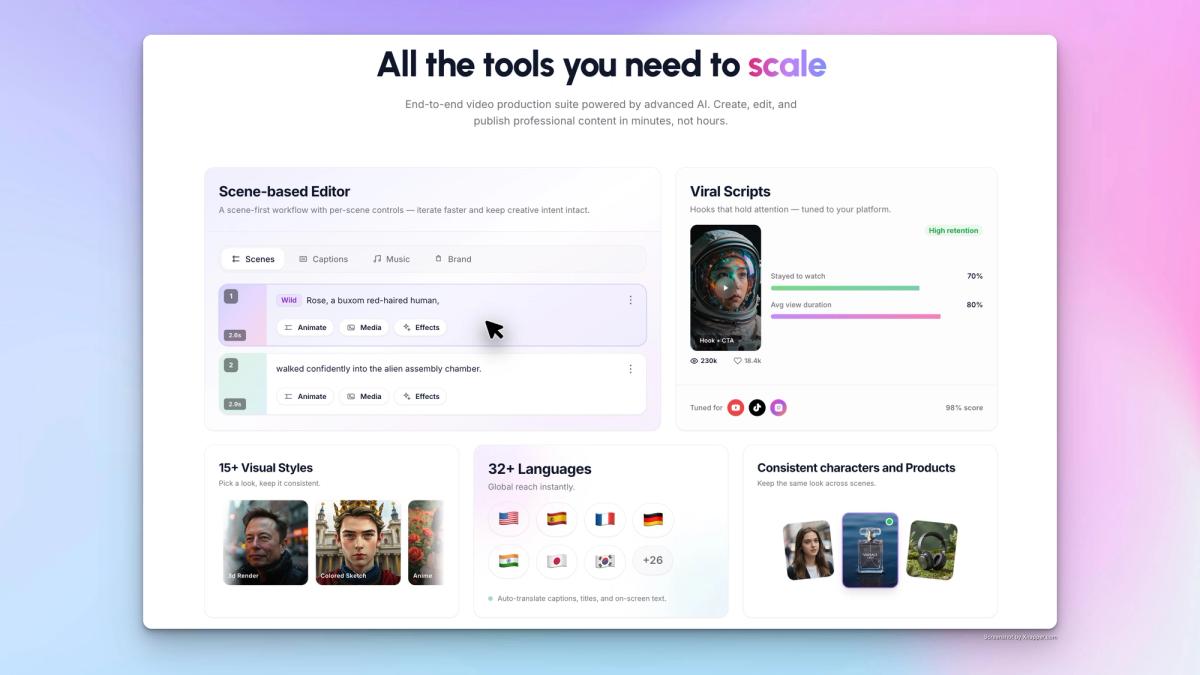
Frameloop’s AI video features are built around that production workflow. Users can generate scripts and scenes, work across multiple visual styles and languages, and refine individual parts of the video instead of treating the output as one uneditable file.
Frameloop’s text-to-video workflow is especially relevant to creators producing faceless videos, stories, product content, tutorials, promotional videos, and short-form social content.
This represents a larger market shift:
The future of AI video is not automation versus control. It is automation that leaves room for direction.
Frameloop is positioned around that middle ground. AI accelerates generation, while the scene-based editor lets the creator add the human decisions that make the video more distinctive and usable.
The AI video market in 2026 is growing quickly, but it is still early.
The technology has already made video production faster and more accessible. The next challenge is making the output consistent, controllable, commercially safe, and useful across complete workflows.
Model quality will continue to improve. Costs will continue to fall. More platforms will add native sound, vertical formats, references, editing, and personalization.
But access to generation will not be the lasting advantage.
The advantage will belong to creators and companies that can turn generation into a repeatable production system without sacrificing judgment, originality, or quality.
Frameloop is built for that next stage: AI handles the production speed, while you retain control over the scenes that shape the final result.

Got great video ideas but need help bringing them to life? Frameloop AI makes it easy to create professional faceless videos with AI-generated visuals, voiceovers, and editing.
Try Frameloop AI For Free