
Avinash Vagh
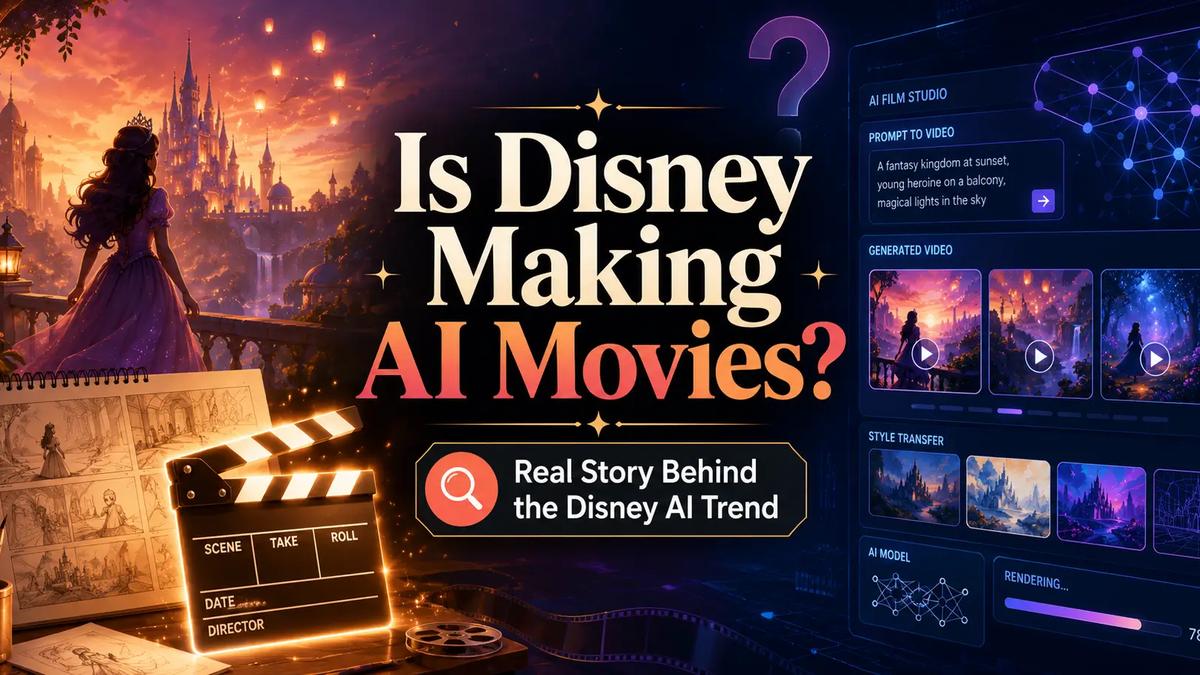
If you've scrolled past a slick "AI Disney" trailer or a headline claiming Disney just dropped its first fully AI-generated film, you're not alone and you're right to be suspicious. Searches for AI Disney movies have jumped as fans try to separate real news from viral fakes. So here's the honest answer, straight up: no, Disney has not released a movie made entirely by AI. But the truth behind the Disney AI story is more interesting than the rumors, and it says a lot about where video creation is heading.
This is a fast-moving topic with real corporate deals, a very public breakup, and a wave of fan-made content muddying the water. Let's clear it all up.
Short answer: not a full one. Disney is experimenting with AI in specific, limited ways, but there is no announced feature film written, animated, and voiced by artificial intelligence.
The confusion mostly traces back to two things. First, a satire site called Mouse Trap News published a story titled "Disney Announces First-Ever Completely AI Movie." It went viral, but it's parody, the site openly labels its content as made-up Disney news. Thousands of people took it at face value, which is a big reason "is Disney making an AI movie" became such a common search.
Second, Disney genuinely did sign a major AI deal in late 2025. That part is real, and it's where the story gets worth telling.
To understand the Disney AI trend, you have to separate three different things people lump together:
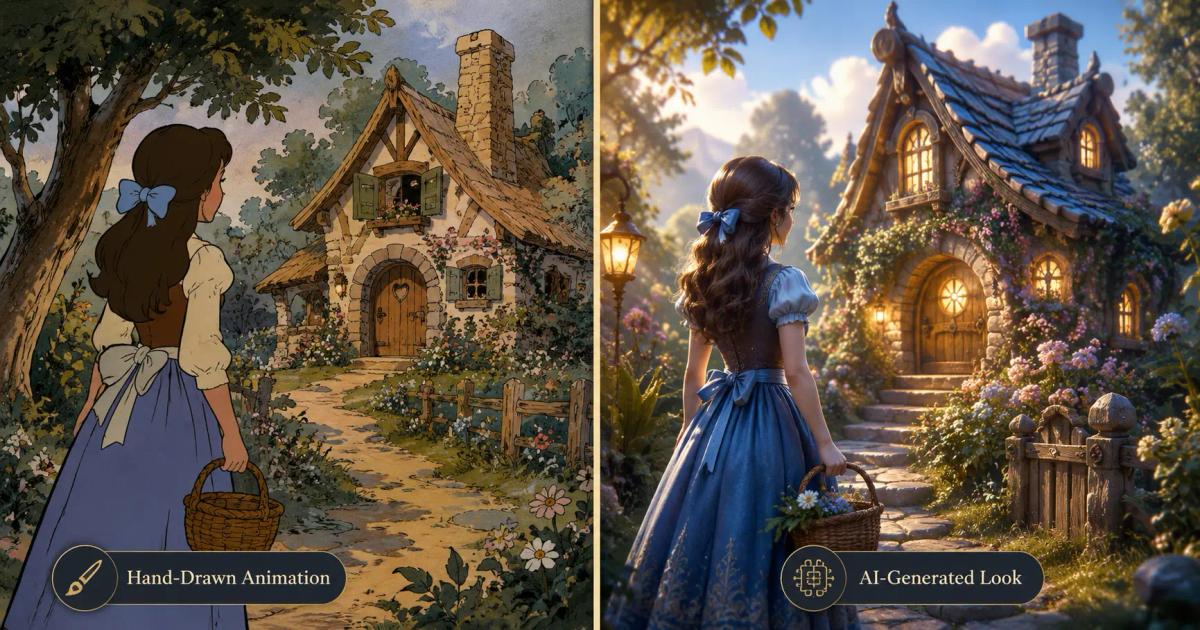
Most of the viral AI Disney movies you see online fall into that third bucket. They're created by fans and creators using AI tools, not by the studio. Disney didn't make them, doesn't endorse them, and in many cases isn't happy about them.
The first two buckets, though, are where Disney's official AI story lives.
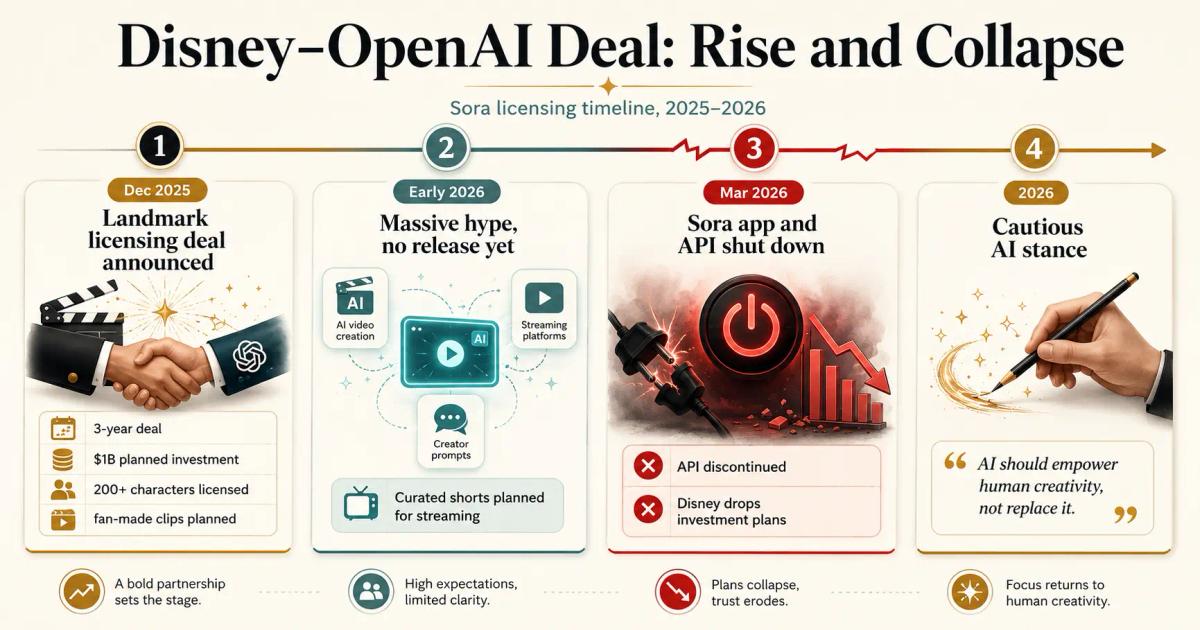
In December 2025, Disney and OpenAI announced a landmark three-year licensing agreement. Under the deal, OpenAI's video generator Sora would be able to create short, user-prompted clips featuring more than 200 characters from Disney, Pixar, Marvel, and Star Wars. Disney also planned to invest a reported $1 billion in OpenAI and stream a curated selection of these fan-made clips on Disney+. You can read the original announcement on Disney's official press release.
This "disney open ai" news was huge. For the first time, a major studio was letting fans generate short videos with its most valuable characters, inside a mainstream AI platform.
Then it unravelled fast. In March 2026, OpenAI abruptly shut down the Sora app and its underlying API, and Disney dropped its billion-dollar investment plans. The much-hyped Disney AI deal collapsed before a single official Sora-Disney short ever shipped. Variety covered why the partnership ended.
At Disney's 2026 shareholder meeting, leadership doubled down on a cautious stance, saying the company's goal with AI is to empower human creativity, not replace it. So while the Disney AI news cycle was loud, the actual output was close to zero.
Here's the nuance most headlines skip. No Disney movie has been made with AI in the sense of "AI wrote and animated it." But Disney has been using AI as a production tool for a while, and that's a different thing.
Ways Disney and its studios have used AI include:
So "disney using ai" is accurate as a behind-the-scenes assistant, not as the author of a film. The distinction matters. A tool that speeds up dubbing is very different from a machine that generates a whole movie.
There's a second reason "AI Disney movies" keeps trending, and it has nothing to do with actual AI. It's criticism.
When Disney's 2023 film Wish landed, a wave of viewers said the story felt so formulaic it was like AI wrote it. A YouTube video asking exactly that racked up millions of views. The movie wasn't AI-written but audiences used "AI" as shorthand for soulless and generic.
The same thing happened again with the 2026 live-action Moana remake. Critics described its animation as barely distinguishable from AI, and several reviewers compared the whole thing to "AI slop." This "disney ai movie wash" discourse, the sense that big-studio output feels machine-made is now a permanent part of the conversation, even when no AI is involved.
It's a useful reminder for any creator: the "AI look" isn't just about the tools. It's about originality. Generic content gets called AI whether a machine touched it or not.
Now to the content most people actually find when they search. Type "ai disney character" or browse for Disney AI videos and you'll hit endless fan creations: reimagined princesses, "what if this movie were a horror film" trailers, and Pixar-style portraits of regular people.
These clips are popular because the aesthetic is instantly recognizable and emotionally warm. That's also why they spread so fast on TikTok, Reels, and YouTube Shorts. An AI Disney character edit can pull millions of views with almost no budget.
But there's a catch every creator needs to understand.
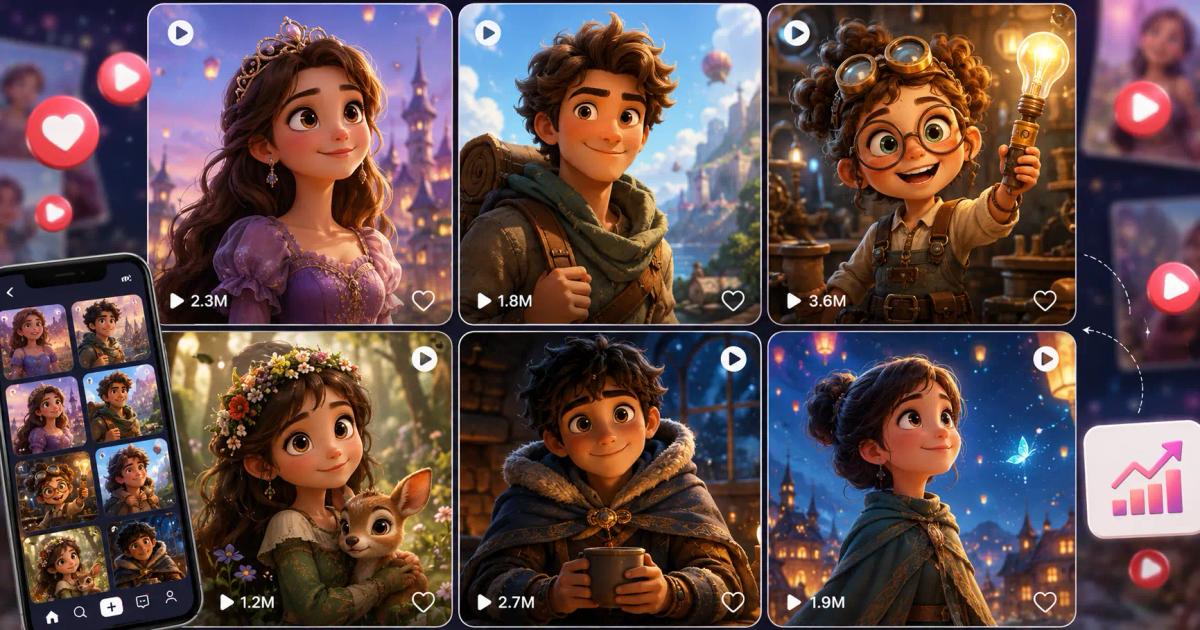
Here's the honest legal picture. Disney's characters are trademarked and heavily protected. The collapsed Sora deal showed exactly how tightly Disney guards its intellectual property, t was willing to license those 200+ characters only under strict conditions. Generating and posting videos of actual Disney characters can put your account, and you, at real risk of takedowns or worse.
The smart move is to create Disney-style and Pixar-style content instead of copying specific characters. You get the same warm, cinematic, animated feel, the thing viewers actually respond to without lifting protected IP. Think original characters in a soft, storybook 3D style, not Elsa or Woody by name.
That's exactly the kind of short-form animation AI video tools are built for now. With Frameloop, you can turn a script or idea into a polished, animated short in a recognizable cartoon style, generate faceless story videos, or build fake-trailer style clips, all with original characters you own. If you want to ride the AI Disney movies trend safely, start with our cartoon video generator or spin up a story clip with our faceless video generator.
The trend rewards volume and consistency. Creators posting Disney-style shorts daily are the ones building audiences and doing it with original characters keeps that momentum from getting killed by a copyright strike.
So, is Disney making AI movies? Not really not full ones, and not the fan clips you see online. What's true is that Disney tried a big AI video deal with OpenAI, it fell apart, the studio still uses AI as a quiet production tool, and critics keep using "AI" as an insult for uninspired films. Meanwhile, fans are the ones actually producing the wave of AI Disney content.
If you're a creator, the opportunity is clear: the appetite for Disney-style animated video is massive, and you can meet it with original, safe, AI-generated content of your own.
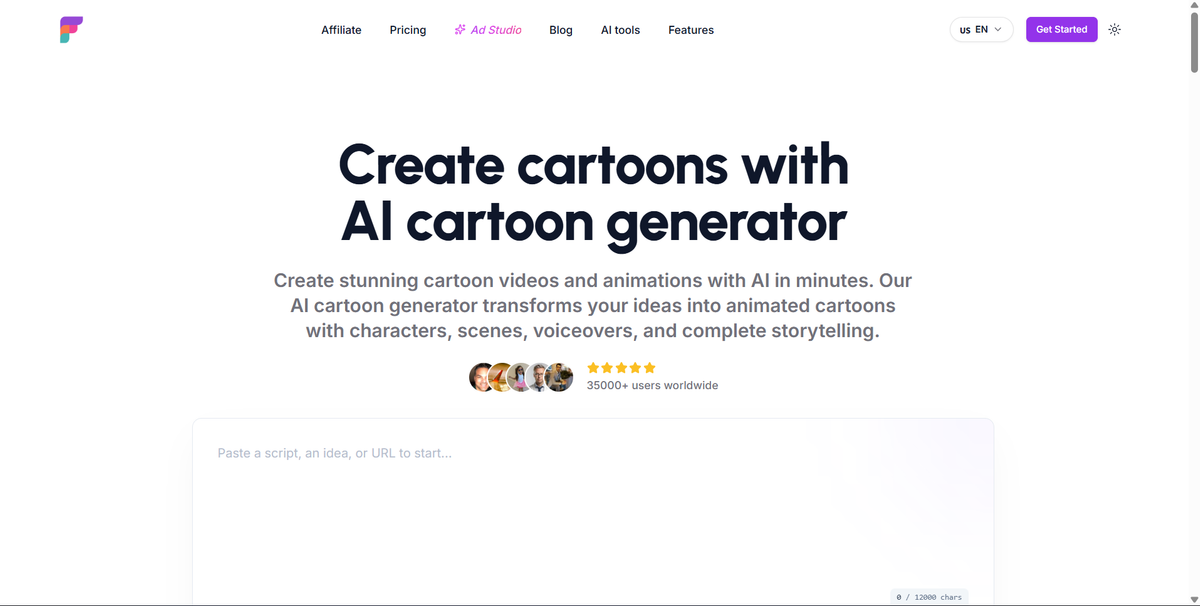
Want to make your own animated shorts? Try Frameloop's cartoon video generator and turn any idea into a Disney-style clip in minutes.
Got great video ideas but need help bringing them to life? Frameloop AI makes it easy to create professional faceless videos with AI-generated visuals, voiceovers, and editing.
Try Frameloop AI For Free